
Thank you for Subscribing to Food Business Review Weekly Brief


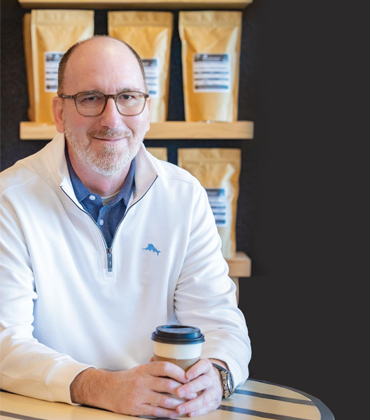 Michael Kemp, Founder and Managing Director
How does operational precision help specialty coffee roasters deliver consistent flavor experiences?
“A coffee can change for dozens of small reasons; shifts in airflow, heat, or bean sourcing. And customers will notice,” says Michael Kemp, founder and managing director of Arlington Coffee Roasters. That awareness shapes how the company operates.
As a locally owned roastery in the heart of Arlington, Kemp has seen how quickly small shifts can alter the experience regular customers have with their coffee.
Rather than accept variation as part of the craft, he built Arlington for precision. Stability begins at the origin, where long-standing sourcing relationships reduce fluctuation before beans even arrive. From there, computer-generated roast profiles guide each batch, supported by equipment oversight that keeps heat and airflow steady. And with roasting done on-site and the same beans served across café, retail and wholesale channels, consistency becomes part of the daily operation — not an afterthought.
 “We want customers to get the same flavor every time,” says Kemp. “When they buy coffee from us, they should know what they’re getting. If something’s off, we fix it. That’s part of earning their trust.”
From Sourcing Stability to Roast Control
What processes help coffee roasters maintain stability from bean sourcing to roasting?
Arlington’s sourcing network spans single-origin beans from Ethiopia, Costa Rica, Brazil, Indonesia, Colombia, Guatemala and Mexican Chiapas. Among them, Brazilian and Mexican Chiapas beans rank as top single-origin sellers and also appear in Arlington’s core blends, including Espresso Seven and Arlington Blend.
Once the beans arrive, the rest of the process remains under Arlington’s direct oversight. Roasting happens on-site, and repeatability is supported by computer-generated roast profiles that track heat, loft and timing across batches.
 Kemp explains that while experienced roasters still listen for the natural popping sounds beans make as they roast, relying on sound alone can allow small variations to slip in over time. By following the digital profiles and observing where each batch sits within its curve, the team can make precise adjustments as needed. The process depends less on instinct alone and more on measurable control, helping ensure the flavor customers expect remains consistent.
That discipline was tested during what seemed like a simple maintenance change. When the roasters were relocated, the vent hoods were taken off and cleaned — something that hadn’t been done in a few years. It didn’t seem like a big deal at the time. But once everything was back up and running, the roast started developing differently.
“Customers noticed almost immediately. The coffee tasted different,” Kemp says. “That surprised us.”
We want customers to get the same flavor every time. When they buy coffee from us, they should know what they’re getting. If something’s off, we fix it. That’s part of earning their trust.
The change wasn’t intentional, but it was enough for regulars to pick up on it. What had happened was that when the vent hoods were cleaned, the airflow through the roaster improved. That shift changed how heat interacted with the beans, which in turn altered the roast profile. Although it wasn’t drastic, it was noticeable.
So, Kemp and his team went back to the computer-generated roast profiles, recalibrated the settings and worked through the batches until the flavor returned to what customers expected. Vent cleaning was added to a regular maintenance schedule after that, recognizing that even something as simple as airflow can influence the cup.
Moments like that sharpen the discipline and show how Arlington Coffee Roasters pays attention to even the smallest operational shifts—because the difference between “almost the same” and “exactly the same” is something that defines its business.
Designing Seasonal Menus Around Customer Recognition
How do specialty coffee roasters balance experimentation with recognizable core menu offerings?
Arlington makes room for experimentation, but it does so intentionally.
Roaster specials and limited seasonal offerings are where the team explores different roasting approaches or highlights a distinct origin. The core coffees, however, are expected to remain recognizable.
Menu development for its café follows that same discipline. Arlington introduces six or seven seasonal drinks each cycle, often sweeter profiles that align with the time of year. This way, the café can feel fresh and timely without changing the foundation that regular customers depend on.
-
Consistency is not about setting a profile once and forgetting it. It’s about watching the details, correcting quickly and making sure small operational changes don’t quietly reshape the cup over time.
Customer input plays a direct role in shaping that balance. Before a blend becomes permanent, it is tested with customers who provide feedback on what they like and what feels off. The process is iterative. Blends are adjusted, tested again and refined until the response is consistently positive.
Arlington Blend, the company’s flagship and best-selling blend, emerged through that same cycle of refinement. Light and crisp at the front with a mellow, smooth finish, it has become a dependable choice for regular customers who value balance in their daily cup. Similarly, Espresso Seven, or E7, anchors the espresso program inside the coffee house. It took several iterations to reach its current profile. For wholesale partners, Arlington offers a closely related espresso blend, E2. While similar in structure, it maintains a distinction that allows the in-house program to retain its own identity.
Dialed for the Menu, Supported for the Long Run
How can coffee roasters support wholesale partners through equipment, training, and service?
 The Arlington Coffee Roasters’ wholesale segment is not simply about supplying beans. It begins with understanding how a partner actually serves coffee. A restaurant adding espresso service operates differently from a café pulling shots all day, and both differ from an office brewing drip for staff. Grind settings and preparation are adjusted accordingly, so the coffee performs in the environment where it will be used.
Sometimes the barrier isn’t even the taste — it’s the infrastructure. When one partner wanted to introduce espresso drinks but couldn’t absorb the upfront cost of equipment, Arlington stepped in. The company purchased the machines, structured a monthly rental and handled maintenance throughout the term. Once the equipment was paid off, ownership transferred. The arrangement allowed the program to launch without delay and grow at a manageable pace.
Preventive maintenance is part of that commitment. Arlington works with trusted technicians to ensure heat levels, calibration and equipment performance remain consistent. The goal is simple: catch small shifts before they affect the taste of the cup. Support also extends to the bar. When needed, the team provides hands-on training, from adjusting grind settings to pulling a clean, balanced shot. By addressing both the equipment and the technique, Arlington helps partners avoid the common pitfalls that lead to inconsistent espresso and dissatisfied customers.
A Community Carrying the Consistency Forward
For Arlington, growth is tied to community. The coffee house was always intended to serve as a local gathering place, with warm lighting and custom murals creating a welcoming setting that invites customers to slow down, stay awhile and savor each sip.
 Kemp sees the idea expanding beyond Arlington to build a community hub as more customers begin ordering from other parts of the country. The goal is not to change what the brand represents as it grows, but to carry the same experience wherever the coffee travels.
That consistency remains central to every new initiative. Cold brew is a major focus for 2026. Arlington is expanding its current nitro offering, increasing production capacity and preparing to move beyond kegs into shelf-stable cans. Additional flavor options are in development, too.
Education is also part of the long-term plan. Arlington has begun documenting its roasting process in YouTube videos, explaining how beans change during roasting and how that shapes their final profile. Plans are underway to expand those materials into a deeper resource library that wholesale partners can use for staff training and that customers can reference to gain a clearer understanding of how their coffee is made.
Behind these efforts is preparation. Arlington is tightening operations, managing costs and documenting procedures carefully so that when additional locations open, likely beginning in 2027, the systems are already in place. Beyond expansion, the company is moving toward direct farm partnerships, in-house importing and eventual presence in key regions such as Mexico and Brazil. Each move strengthens control from the origin to the cup.
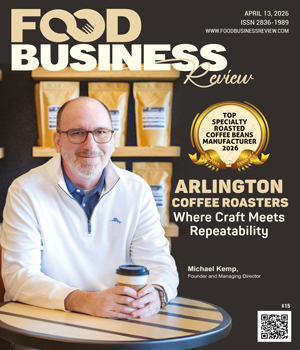
It is this discipline, rooted in community, craftsmanship and repeatability, that places Arlington Coffee Roasters as Food Business Review’s Top Specialty Roasted Coffee Beans Manufacturer 2026. The recognition reflects a roaster focused less on what is new and more on what can be repeated with care, in every cup, every day.
Consistency and Craft in Specialty Coffee Roasting
Executives responsible for sourcing specialty roasted coffee beans operate in a market defined by taste, margin pressure and brand risk. Independent cafés, restaurant groups and specialty retailers build reputations on repeat experiences. When a signature espresso shifts in flavor or a popular single origin loses its profile, customers notice immediately. The supplier’s reliability becomes inseparable from the buyer’s brand equity.
In this environment, dependable flavor is not an abstract quality metric. It is a commercial discipline that protects traffic, subscription revenue and wholesale relationships. Buyers must evaluate whether a roasting partner can reproduce the same sensory characteristics across batches and over time, even as green coffee markets fluctuate. That discipline begins at sourcing. Longstanding broker relationships that secure recurring lots from the same farms reduce variability at the outset and create a stable foundation for flagship blends and core single origins.
Process control inside the roastery is equally consequential. Modern profile tracking, heat and airflow monitoring and documented roast curves offer a repeatable framework that goes beyond traditional cues alone. Consistency is reinforced through maintenance routines that anticipate small technical changes before they alter cup quality. Buyers should probe how a roaster documents, measures and corrects deviations, not only how it describes flavor notes.
Customer feedback loops provide another signal of maturity. Structured tastings, focus groups and iterative blend development demonstrate a willingness to refine products before broad release. A roaster that tests new blends with panels and advances only those that achieve near universal approval shows restraint and commercial awareness. That same discipline must extend to error management. When batches fall short, the response should be decisive: isolating affected lots, replacing product and retraining staff to prevent recurrence. Short term cost is outweighed by long term loyalty.
Wholesale partnerships demand additional scrutiny. Restaurants and cafés often require more than beans; they need equipment access, preventive maintenance and barista training to translate roasted quality into cup performance. Buyers should look for suppliers that provide structured support, from grinder calibration guidance to technician relationships that maintain espresso systems. Digital education libraries can further reduce onboarding friction for new staff and protect consistency across multiple locations.
Finally, growth strategy matters. The expansion into cold brew formats, including kegged and nitrogen infused offerings, signals awareness of shifting consumption patterns. Controlled rollout plans that prioritize flavor stability before wider retail distribution reflect disciplined scaling rather than opportunistic diversification. Documentation of processes and cost management ahead of new site openings indicates foresight that benefits wholesale partners who depend on uninterrupted supply.
Arlington Coffee Roasters exemplifies these principles. It secures recurring single-origin beans from established broker relationships to anchor blends such as its Arlington Blend and house espresso. It relies on computer-generated roast profiles and scheduled equipment maintenance to maintain repeatability. When quality slips, it retrains staff to restore standards. For wholesale clients, it structures equipment rental arrangements, coordinates technician support, and provides hands-on training to optimize espresso extraction. Its planned expansion into nitro cold brew in kegs and cans builds on controlled production methods already in place. For buyers prioritizing sustained flavor integrity and partnership depth, Arlington Coffee Roasters stands as a considered choice in specialty coffee roasting.
...Read more
Specialty Roasted Coffee Beans Manufacturer Info
Q1
What makes Arlington Coffee Roasters stand out among specialty roasted coffee beans manufacturers?
Craftsmanship and locality define its identity. Arlington Coffee Roasters distinguishes itself among specialty roasted coffee beans manufacturers by roasting beans in-house, creating a direct connection between sourcing, roasting and the final cup. This approach allows it to maintain strict control over flavor development while delivering coffee that reflects both origin and roasting expertise. Its emphasis on community and customization adds a layer of authenticity that elevates its position within specialty roasted coffee beans manufacturers.
Q2
How does Arlington Coffee Roasters approach the roasting process?
Precision and freshness guide every roast. Arlington Coffee Roasters produces beans tailored to specific blends and origins, ensuring each batch meets its quality expectations. As one of the specialty roasted coffee beans manufacturers focused on small-batch roasting, it prioritizes freshness by roasting to order and adjusting roast profiles to highlight distinct flavor characteristics. This hands-on process results in a consistent yet dynamic product offering.
Q3
How does the company support customers and wholesale partners?
Support extends beyond supplying beans to building long-term relationships. Arlington Coffee Roasters offers wholesale solutions designed to mirror the quality and consistency found in its café experience. Its ability to tailor roasted coffee products to different needs reflects how specialty roasted coffee beans manufacturers can align production with customer preferences while maintaining high standards.
Q4
What value do Arlington Coffee Roasters’ products bring to customers?
Freshness, customization and flavor integrity define its value. By roasting beans on-site and offering a variety of blends and origins, Arlington Coffee Roasters ensures customers receive coffee that aligns with their taste preferences. This focus on individualized roasting highlights how specialty roasted coffee beans manufacturers can deliver both quality and variety without compromising consistency.
Q5
What role does community and craftsmanship play in its operations?
A strong sense of place shapes its operations. Arlington Coffee Roasters integrates its roasting expertise with a community-focused coffeehouse environment, creating a space where coffee production and customer engagement intersect. Among specialty roasted coffee beans manufacturers, this dual approach strengthens brand identity while reinforcing trust through transparency and direct interaction.
Q6
Why is Arlington Coffee Roasters relevant in today’s specialty coffee market?
Demand for traceable, high-quality coffee continues to grow. Arlington Coffee Roasters addresses this by offering freshly roasted beans, customizable blends and nationwide accessibility through shipping. Its ability to combine small-batch roasting with scalable distribution reflects how specialty roasted coffee beans manufacturers can meet modern expectations without losing their artisanal roots.
Company :
Arlington Coffee Roasters
Management Michael Kemp, Founder and Managing Director
Description
Arlington Coffee Roasters is a specialty coffee house and bean manufacturer built on consistency, disciplined sourcing and roast control. From café to wholesale and retail, it delivers repeatable flavor, community warmth and measured growth grounded in craftsmanship and long-term stewardship.