
Thank you for Subscribing to Food Business Review Weekly Brief


Why did RushRoot focus on simplifying supplement choices for everyday consumers? After decades in health retail and building a health-focused brand in Europe, Perry Hoogendam returned to the U.S. supplement market with a recurring observation: many customers wanted to improve their health but were unsure what to buy. That insight led him to establish RushRoot Health Products USA, built to simplify supplement selection and reduce the cost of daily protein intake. He had watched shoppers build regimens from individual vitamins, performance supplements and protein products, influenced by marketing claims or fragmented guidance from influencers, store associates or online content, rarely with clarity on cumulative intake or functional alignment. As assortments expanded, the increased options made decisions more difficult. In many cases, per-SKU sales velocity became uneven. A handful of high-recognition items drove traffic, while adjacent products relied heavily on promotion to move inventory. RushRoot was built to make supplement selection clearer and sustained protein intake more affordable. It develops goal-based supplement bundles and multi-serving protein beverages designed for everyday consumer use within mainstream retail environments. “The supplement industry doesn’t suffer from a lack of products,” says Hoogendam, founder and CEO. “It suffers from a lack of structure. Without it, trust erodes. We rebuild it in a way that makes sense for retailers and households.” For RushRoot, structure is not a marketing narrative but an operating principle. Without a clear system guiding selection and dosage, consumers over-supplement, abandon regimens when expectations are unmet or struggle with the cost of single-serve protein formats. RushRoot organizes its products around defined health goals so customers can follow a clearer routine. Customers can also use the RushRootGOLD web-download app to log meals by photo or voice and scan labels to track nutrition alongside their routine on any device.

Artisan Bread Producer
It begins with a scent—earthy, warm and timeless. The kind that drifts from old European bakeries, where handcrafted breads are baked fresh each morning. The crunch of a rustic crust, the tender pull of a warm center and the comfort of something handmade and honest. For many, it’s a taste of childhood. For Breadsmith, it’s a tradition brought to life each morning. Rooted in the time-honored traditions of old-world master bakers, the company has built a proud legacy of authenticity, crafting handcrafted, European-style artisan breads. At Breadsmith, each day begins on a clean slate. Every bread, cookie or scone is made from scratch, using only the highest-quality ingredients with no additives or preservatives. But freshness is just the beginning. Breadsmith’s true hallmark lies in the mindful care that flows from the ovens into the heart of every community it serves. “Our stores are locally owned, operated and rooted in the community. Whether it’s supporting school fundraisers or donating fresh, unsold bread to local shelters, we believe in giving back every single day,” says Tim Malouf, president. Where Every Loaf Tells a Story Breadsmith offers more than 300 unique product recipes, including pie bread filled with house-made fruit fillings, cookies that range from classic chocolate chip to indulgent blueberry cheesecake cookie and even coffee cakes. Beyond flour, water, yeast and salt, every baked good is enriched with the taste of nostalgia and familiar moments. It’s the kind of bread that wouldn’t feel out of place on a grandmother’s kitchen counter: simple, honest and made to be shared. That is why longtime customers who grew up with Breadsmith return as adults with stories that span years.

Craft Kombucha Company

The rise of the sober-curious movement has sparked demand for drinks that offer the depth, balance, and sensory appeal of a fine cocktail while promoting health and wellness. Kombucha fits this niche perfectly: it is alive, functional, and flavorful. But producing truly exceptional kombucha remains one of the most challenging feats in the beverage industry. That’s where Zachary A. Smith, a certified sommelier recognized by GQ as one of America’s most innovative beverage makers, brings his craft. Drawing on years of experience in wine tasting, cocktail creation, and sensory evaluation, Smith founded Dalai Sofia, a Charleston-based kombucha brand built on two pillars, including innovative flavor design and sustainable sourcing. Rooted in Charleston's Terroir Charleston, South Carolina, offers an enviable set of natural resources, including pristine Appalachian Mountain water, fertile farmland, sugar palms, and even a tea plantation. These elements enable Dalai Sofia to maintain local production, sourcing fresh herbs, botanicals, and fruit directly from nearby growers. Smith avoids extracts and pasteurized bases. “We steep whole fruits with their skins intact, much like making sangria, to capture natural tannins and aromatic oils,” adds Smith. The result is a layered flavor profile that avoids the flatness of sugary juices and makes full use of every part of the fruit. His approach to flavor creation mirrors the structure of a fine wine or expertly crafted cocktail. Every recipe at Dalai Sofia is crafted with a focus on pairing seasonally available ingredients and incorporating functional benefits, ensuring each flavor profile resonates with taste and purpose. Its signature blend, This Lil’ Peach, combines stone fruits from local orchards with cooling botanicals like mint and delicate rose petal accents—ideal for Charleston’s humid summers and even supportive of skin pH balance. Bucci Mane is another imaginative blend featuring a tropical mango flavor combined with lion’s mane mushroom and warm spices. Blue Magic (Appalachian blueberries, lemon verbena, spirulina) and Salty Ginger (Johns Island ginger paired with sea samphire) are also grounded in local ingredients and functional benefits. Even more specialized picks like The G-Spot deliver grapefruit, galangal, and pink peppercorn for a bracing, circulation-boosting brew.
Top Wine Club Management Software 2026
Why do growing wine clubs struggle with operational scalability? Wine clubs rarely break because of demand. They break because of spreadsheets. As membership grows, many wineries, retailers, and wine bars still manage releases with Excel files or paper lists. Staff manually tracks who gets which bottles, who has paid, and what needs to ship. Billing takes days. Shipments go out unpaid. Simple mistakes multiply with every new member. That operational strain is exactly where The Wine Club Site focuses. Not winery management. Not point of sale. Strictly wine club releases, members, tiers, billing events, and shipments. The platform replaces manual coordination with a single system that organizes every member and every release in one place. Operators set schedules, assign wines to tiers, apply pricing or discounts, and execute billing and fulfillment in minutes rather than days. Reports show instantly who has paid and what is leaving the door, removing guesswork before a release goes out.

CXO INSIGHTS

The Digital Age of Food Safety and Quality
Jorge Hernandez, Quality Assurance VP, the Wendy’s Company [NASDAQ : WEN]

Maximizing Productivity in Food Safety with Sustainable Practices
Ana Cristina Morales, Director of Global Food Safety at Grupo Bimbo

Succeeding Together: The Collaborative Path to Quality Success
Jenny Dresse, Vice President of Quality, Finlays America, Finlays Solutions
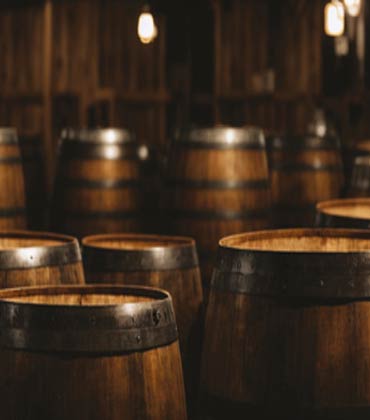
The Whiskey Barrel: From Passive Container to Creative Partner
Andrew Wiehebrink, Director of Spirit Research and Innovation, Independent Stave Company

Embracing Change and Ensuring Quality in Craft Brewing
Ben Chrisfield, Quality Assurance Manager, New Belgium Brewing


IN FOCUS

Wellness Reimagined: Trends Reshaping the Supplement Beverage Landscape
Premium supplement and functional drink producers are refining innovation, operations, and partnerships to build credibility, resilience, and sustainable growth across evolving wellness markets.
EDITORIAL
Structured Growth In Functional Nutrition
Clarity is becoming a competitive advantage in the food and beverage industry. As product categories expand, companies are prioritizing structure, usability and consistency over excess choice. Functional nutrition is shifting toward models that simplify consumption while maintaining quality and regulatory discipline. This edition of Food Business Review examines how organizations are aligning product design and operations with long-term consumer adoption.
Our cover story features RushRoot Health Products USA, recognized as Top Premium Supplement and Functional Drinks Producer 2026. The company addresses a core inefficiency in the supplement market, where excessive choice leads to inconsistent usage and declining trust. By introducing goal-based supplement bundles and multi-serving protein formats, it shifts consumption from fragmented purchasing to structured routines. Its retail-first model strengthens category management while improving affordability and adherence. Through disciplined product architecture, life-stage formulation and controlled distribution, the company positions supplements and functional drinks as integrated components of everyday consumption.
Within brewing operations, Ben Chrisfield, Quality Assurance Manager at New Belgium Brewing, outlines how proactive food safety systems and supplier verification frameworks strengthen product integrity. He emphasizes integrating analytical and sensory testing, along with emerging data tools, to improve decision-making while adapting to shifting raw material conditions.
From the spirits research perspective, Andrew Wiehebrink, Director of Spirit Research and Innovation at Independent Stave Company, highlights how barrel engineering has evolved into a controllable variable in production. By refining toast profiles, wood structure and maturation conditions, producers can shape flavor development and reduce variability with greater precision.
These perspectives point to a clear trajectory. Food and beverage innovation will advance through systems that combine scientific insight, operational discipline and product clarity. We invite readers to explore how organizations are building scalable, reliable and consumer-aligned models for the future.
