
Thank you for Subscribing to Food Business Review Weekly Brief


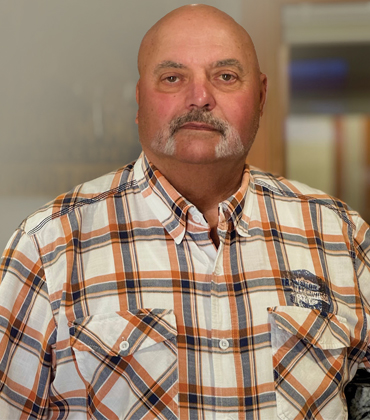 Jim Cheney, CEO
What issues arise when meat processing responsibilities are fragmented across multiple operations?
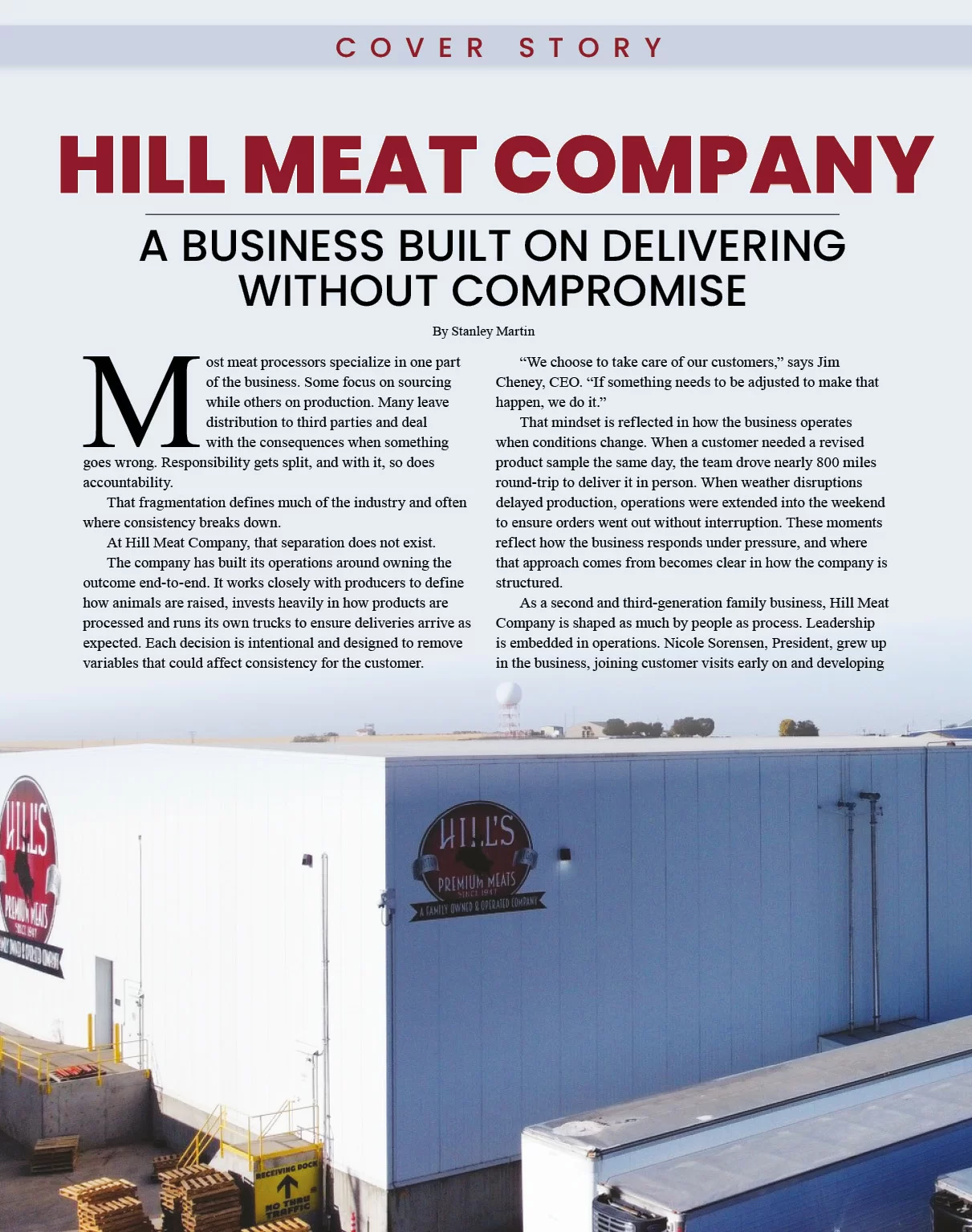
Most meat processors specialize in one part of the business. Some focus on sourcing while others on production. Many leave distribution to third parties and deal with the consequences when something goes wrong. Responsibility gets split, and with it, so does accountability.
That fragmentation defines much of the industry and often where consistency breaks down.
At Hill Meat Company, that separation does not exist.
The company has built its operations around owning the outcome end-to-end. It works closely with producers to define how animals are raised, invests heavily in how products are processed and runs its own trucks to ensure deliveries arrive as expected. Each decision is intentional and designed to remove variables that could affect consistency for the customer.
 “We choose to take care of our customers,” says Jim Cheney, CEO. “If something needs to be adjusted to make that happen, we do it.”
That mindset is reflected in how the business operates when conditions change. When a customer needed a revised product sample the same day, the team drove nearly 800 miles round-trip to deliver it in person. When weather disruptions delayed production, operations were extended into the weekend to ensure orders went out without interruption. These moments reflect how the business responds under pressure, and where that approach comes from becomes clear in how the company is structured.
As a second and third-generation family business, Hill Meat Company is shaped as much by people as process. Leadership is embedded in operations. Nicole Sorensen, President, grew up in the business, joining customer visits early on and developing a firsthand understanding of relationships that extend beyond transactions. That continuity has built a culture of personal, long-term accountability, which, in turn, has supported the company’s ability to scale its bacon, ham and sausage supply across major distributors and foodservice networks while maintaining alignment across the business.
Reinventing Without Losing the Core
How did Hill Meat Company adapt its business model during industry consolidation pressures?
 The company’s model took shape in the early 1990s, when Hill Meat Company recognized its approach was no longer sustainable as industry consolidation accelerated. At the time, it operated as a traditional local meat packer with a business model based on smaller-scale operations and direct sales, an approach that became increasingly difficult to sustain.
While many processors struggled to adapt, Hill Meat made a decisive shift. It moved away from competing across multiple fronts and concentrated entirely on pork products.
At the same time, Hill Meat Company began transitioning away from a fragmented customer base toward partnerships with larger distributors. This shift required overcoming initial resistance, as many of these distributors had previously viewed the company as a competitor. Trust was built over time as consistent execution changed that perception.
We choose to take care of our customers. If something needs to be adjusted to make that happen, we do it.
Built Around Customers
Why are operational decisions aligned closely with customer expectations in this business model?
At Hill Meat Company, operational decisions are shaped by customer expectations rather than internal convenience. This approach requires a high level of coordination, since procurement, production and delivery must all align with what the customer ultimately needs to receive.
 Rather than treating orders as static inputs, the company views them as commitments that define how work is organized across the business. Production schedules are built around demand, and adjustments are made in real time when conditions change. This level of responsiveness is central to maintaining predictable outcomes.
That ability to respond quickly is closely tied to the company’s structure. Because leadership remains directly involved in daily operations, decisions can be made without delay and implemented without layers of approval. This helps address issues before they escalate.
“We are here for our customers, and we will do what it takes to get them what they want,” says Sorensen.
When disruptions occur, the company absorbs the pressure internally by extending production, reallocating resources and adjusting schedules so customers continue to receive what they expect. This approach reflects a decision model that prioritizes outcomes over process constraints.
-
We are always aware of what’s new, but we focus on what actually works for us.
Over time, this has also shaped relationships that extend beyond transactional interactions. Customers rely on the company not just for supply, but for consistency in how that supply is delivered, even when circumstances are less than ideal.
Protecting Quality at Every Stage
In what way does controlling sourcing and processing improve product quality consistency?
Maintaining consistency at scale requires control beyond the production process. Hill Meat Company places significant emphasis on raw material quality, working closely with producers who meet defined standards for genetics, feed programs, housing and animal handling. These requirements reduce variability at the source and ensure that raw materials entering the facility align with the company’s expectations.
 By controlling quality at the source, the company reduces the need for downstream correction, an issue that often affects processors relying on inconsistent inputs. Within the facility, this philosophy continues through a combination of experience and targeted investment.
Over time, Hill Meat Company has expanded operations and incorporated advanced processing systems that improve yield and consistency. These investments are evaluated based on their ability to enhance performance, not modernization alone. The company balances traditional product standards with modern processing capabilities to maintain consistency at scale.
“We are always aware of what’s new, but we focus on what actually works for us,” notes Sorensen.
By combining disciplined sourcing with carefully selected technology, the company has created an environment where quality is maintained without introducing unnecessary complexity. Each stage reinforces the next, creating a system that performs reliably over time.
Owning the Delivery Experience
Even the most well-managed production process can fall short if distribution is not handled with the same level of care. Hill Meat Company has addressed this by maintaining the company’s own fleet of trucks, allowing it to extend control beyond the facility and into the final stage of the supply chain.
 This approach provides visibility into how products are handled and ensures that delivery timelines are met with greater consistency. Drivers are part of the organization and understand both operational requirements and customer expectations. Over time, they develop familiarity with routes and delivery points, which contributes to smoother execution.
“There is a different level of care when it’s your own people,” adds Cheney. “They know what needs to be done and take responsibility for it.”
Owning this part of the process also allows the company to respond more effectively when challenges arise. Adjustments can be made quickly and communication remains direct, reducing the likelihood of delays or disruptions. The final mile reflects the same standards as production.
Growing with Discipline
As Hill Meat Company has expanded, it has done so with a clear focus on maintaining the integrity of its operating model. Growth has been supported by investments in capacity, including expanded cooking operations, increased storage and enhancements to ready-to-eat processing. These developments allow the company to handle higher volumes while maintaining efficiency.
 At the same time, the business has remained selective about where it grows. Rather than diversifying into a wide range of new products, it has focused on strengthening its core offerings. Bacon continues to play a central role, while sausage represents a key area of growth that aligns with existing capabilities.
“Every new product adds complexity,” Cheney explains. “We focus on what we do well and build on that.”
This disciplined approach helps the company scale without introducing the operational fragmentation that often accompanies rapid expansion.
Redefining What It Means to Deliver
At Hill Meat Company, delivery is defined by a single outcome. The customer receives exactly what was expected, on time and without compromise. That expectation shapes how the business operates every day. Decisions are guided by the end result, from sourcing raw materials to how products move through production and reach their destination. Each step is aligned to ensure consistency.
Over time, this approach has built a level of reliability that customers depend on. Orders are fulfilled as expected, adjustments are made when conditions change and performance remains steady even under pressure. The company's strength lies in its execution. Clear ownership, close involvement and disciplined decision-making ensure that commitments are followed through without deviation.
Combined with its scale, sustained growth and ability to respond under pressure, this level of execution differentiates the company in a competitive market. That consistent ability to deliver without compromise is what defines Hill Meat Company and makes it a compelling choice for the Meat Supplier of the Year 2026 recognition.
Consistency, Control and Accountability in Modern Meat Supply
Executives responsible for sourcing meat products operate in a market where reliability often outweighs price advantages. Supply disruptions, inconsistent quality and fragmented logistics create downstream risk for distributors, foodservice operators and retail networks alike. Buyers are no longer evaluating suppliers solely on product range or cost positioning; they are assessing whether a partner can deliver uniform quality, predictable fulfillment and accountability across the entire chain from sourcing to delivery.
The quality of finished meat products is inseparable from the standards applied to raw materials. Suppliers that maintain strict oversight of animal genetics, feed programs, housing and handling practices establish a foundation that reduces variability before processing even begins. This upstream discipline is often the dividing line between suppliers that manage consistency and those that react to defects later in the process. For buyers, this translates into fewer surprises in texture, yield and shelf performance across product lines such as bacon, ham and sausage.
Execution inside the facility reinforces that foundation. Experience alone is insufficient without alignment to modern processing demands. Leading suppliers balance craftsmanship with continuous investment in equipment and methods, ensuring that production remains both efficient and repeatable. Efficiency is not a cost exercise alone; it determines whether a supplier can remain competitive without compromising product integrity. Facilities that evolve—by expanding capacity, refining processes, and adopting the right technologies—can scale without introducing inconsistency, which is critical for buyers managing large distribution volumes.
Fulfillment reliability is equally decisive. Many suppliers rely heavily on third-party logistics, which introduces variability at the final stage of delivery. Direct control over distribution creates a different dynamic. When drivers, routes and handling protocols are managed internally, the supplier retains responsibility for product condition and timing until it reaches the customer. This continuity strengthens relationships at the receiving end and reduces friction across procurement and warehouse operations. Buyers value partners that deliver on time and understand the nuances of their receiving environments and adapt accordingly.
Adaptability within a disciplined structure further distinguishes high-performing suppliers. Decision-making speed often determines whether customer needs are met during disruptions, whether caused by weather, supply constraints, or demand spikes. Organizations that maintain close alignment between leadership, production, and procurement can adjust schedules, allocate resources, and fulfill commitments without prolonged escalation chains. This responsiveness, grounded in clear operational visibility, allows buyers to maintain continuity in their own supply chains.
Hill Meat Company reflects this combination of control and adaptability through its approach to sourcing, production, and distribution. It applies strict standards at the raw material level, working with producers that meet defined expectations for quality inputs. Inside its operations, it blends long-standing processing expertise with ongoing investment in equipment and facility expansion, supporting both efficiency and consistency. Its use of company-managed trucking extends accountability through delivery, ensuring products arrive as expected. The business structure enables direct decision-making, allowing it to adjust production or fulfillment in response to customer needs without delay. For organizations prioritizing dependable supply and consistent product performance, it represents a partner aligned with those expectations.
...Read more
Meat Product Suppliers Info
Q1
Why is Hill Meat Company considered among top meat products supplier companies?
Hill Meat Company is considered among top meat products supplier companies because it has specialized in premium pork processing and smoked meat production since 1947 while supplying grocery stores, restaurants and distributors across the western United States and international markets including Japan and Korea. The company is especially recognized for its bacon production, high quality pork sourcing standards and long standing family owned operating model.
Q2
How does Hill Meat Company differentiate its approach as a meat products supplier?
A quality first pork production philosophy defines its approach. Hill Meat Company focuses on 100% natural pork products without fillers or by products while emphasizing controlled sourcing, smokehouse expertise and product consistency. Its meat products supplier strategy centers on premium bacon, ham, smoked sausage and fresh sausage products produced using carefully selected pork and traditional smoking methods combined with modern processing technology.
Q3
How does the company support retailers and foodservice customers?
Integrated production and distribution capabilities shape its support model. Hill Meat Company supplies products through retail grocery channels, foodservice operations and private- abel partnerships while maintaining company managed logistics and regional distribution systems. Its meat products supplier operations also include private label manufacturing for multiple food brands, allowing customers to access customized pork product programs alongside Hill’s Premium Meats offerings.
Q4
What value does Hill Meat Company’s meat products supplier model deliver?
Product consistency and premium pork quality define the value delivered. Hill Meat Company applies strict sourcing and food safety standards while investing in smokehouse technology, facility modernization and production efficiency improvements. Its meat products supplier approach supports reliable product performance across bacon, sausage and ham categories while maintaining flavor consistency and operational scalability for growing retail demand.
Q5
What role do food safety and facility expansion play in the company’s operations?
Food safety investment and production scalability are central to its operations. Hill Meat Company maintains BRC AA+ certification and has invested heavily in food safety systems, processing technology and facility expansion projects. The company recently announced an $18 million expansion initiative designed to double cooking and smoking capacity while improving operational efficiency through advanced processing equipment.
Q6
Why is Hill Meat Company relevant in today’s meat processing industry?
Consumers and retailers increasingly seek meat suppliers capable of delivering premium quality, food safety reliability and scalable production capacity. Hill Meat Company addresses this demand through a meat products supplier model focused on pork specialization, smokehouse expertise and long-term operational investment. Its combination of family ownership, regional brand recognition and expanding production infrastructure positions the company within a meat industry increasingly driven by product quality and supply chain consistency.
Company :
Hill Meat Company
Management Jim Cheney, CEO
Nicole Sorensen, President
Description
A family led meat processor builds consistency by staying accountable across sourcing, production and delivery. By eliminating fragmentation and aligning every stage of its operations, it delivers reliable outcomes for distributors and foodservice partners operating in complex and demanding supply environments.