
Thank you for Subscribing to Food Business Review Weekly Brief

the Cheesecake Factory
Ata (Al) Baroudi, Ph.D, Vice President, Food Safety and Quality Assurance
The Unyielding Pursuit of Excellence In Food Safety
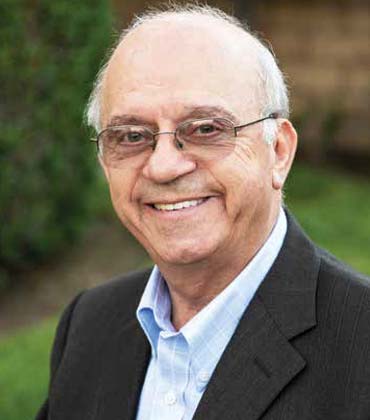
Ata (Al) Baroudi
Ata Baroudi is the Vice President of Quality Assurance and Food Safety at The Cheesecake Factory. He has over 30 years of leadership in food safety, holds advanced degrees in food science, and is a certified food scientist. Recognized industry-wide, he received the 2022 Lifetime Achievement Award for Outstanding Leadership in Food Safety from the National Restaurant Association and Ecolab. Ata is a frequent speaker on food safety culture and technology innovation.
Recognizing Dr. Baroudi’s extensive expertise in food safety leadership and quality assurance, this piece provides valuable insights into overcoming industry challenges, implementing innovative technologies and fostering a culture of integrity to protect consumer health and advance food safety standards.
From Early Challenges to Industry Innovations
Food safety is not negotiable if you are in the food business. That belief has been the foundation of my career in food safety and quality assurance. I also firmly believe that human dignity is not a privilege, but everyone’s right. No one should go to bed hungry.
My journey began early. My father saw my potential and encouraged me to pursue a path in the food industry. I studied in Lebanon, where most of my education was in French. Then, I went to Cairo University for my undergraduate degree in Agricultural Engineering, where classes were taught in Arabic. The first two years were challenging as I had to maneuver between languages, but I graduated with honors.
The Lebanese government awarded me a scholarship to pursue graduate studies anywhere in the world. I chose UC Davis for my Master’s in Food Science and Technology. However, UC Davis only offered a master’s degree, so I moved to The Ohio State University for my Ph.D in the same field.
Laban, a yogurt-like product from Lebanon. Back then in the early 70’s, yogurt was not common in the U.S. My research, which included isolating fermentation bacteria and yeast, was published in the Journal of Dairy Science. This work helped lay the groundwork for the U.S. yogurt industry. I sometimes joke that I’m the father of yogurt in this country.
At the Ohio State, I also tackled browning in potato chips, a major issue caused by reducing sugars reacting during frying. I developed many innovative methods, such as a frydry-fry system and vacuum cooking, both systems are still used in the industry today. The baked potato chip technology was an outcome of the drying system I introduced. The vacuum cooking technology was commercialized in California, and it’s been gratifying to see my research translate into realworld solutions.
Leading through Crises and Embracing Technology
After completing my PhD, I joined Borden, where I spent five years on the factory floor, gaining hands-on experience before moving into corporate food safety roles. I oversaw 93 factories producing milk, ice cream, dry milk, sweet condensed milk and cheese. I created a second-party inspection program with biannual audits and personally conducted environmental swabbing. When Listeria monocytogenes emerged as a deadly pathogen in the mid-1980s, our plants remained recall-free thanks to these proactive measures.
In 1992, I joined Vons, a West Coast supermarket chain, to oversee food safety across stores and factories. I quickly resolved a listeria problem in their ice cream plant and soon managed the E. coli O157:H7 crisis linked to Jack in the Box 1993 meat outbreak. Although Vons only manufactured raw frozen patties, the outbreak stemmed from undercooking at the restaurant level. Working with regulatory agencies, I helped protect Vons from liability and preserve their reputation.
Integrity means doing what is right, even when it is hard. As a food safety professional, you are responsible for protecting consumers and upholding the highest standards.
Later, I founded FSI International, a food safety consulting firm. One of my first clients was Bill Marler, a renowned food safety lawyer. In 2008, The Cheesecake Factory invited me to establish their Food Safety Department. Before accepting, I asked whether the position was about real commitment or just optics. The founder assured me it was the former, and I accepted the role.
From Ozone Sanitization to Remote Auditing
When I joined The Cheesecake Factory, I spent six months evaluating their kitchen operations. The made-to-order fresh foods prepared across multiple stations posed a high risk of cross-contamination. One major innovation I introduced was using ozone technology to sanitize fresh produce. Ozone is safe and instantly kills bacteria, viruses, and mold. After six generations of refinement, it remains a vital kill step for ready-to-eat foods like salads, making them among the safest you can find in any restaurant. I was instrumental in passing the Food Facilities Sanitization Bill “AB 1427” in California State Assembly that cleared the way for the ozone to be approved in California Cal Code (2012).
I also pioneered remote video auditing (RVA), implementing continuous virtual monitoring of food safety checkpoints well before COVID-19 made remote inspections mainstream. Cameras were strategically placed in key locations to provide 24/7 oversight and real-time scoring without requiring onsite inspectors. We expanded RVA to include animal welfare monitoring, partnering with renowned expert Dr. Temple Grandin. The pandemic validated the RVA’s value, making remote auditing an essential tool.
Integrity Above All
My top advice to upcoming leaders in food safety and quality assurance is to maintain integrity. Executives often consider food safety an overhead cost until a crisis happens, and then it becomes the number one priority. You must relentlessly advocate for fact-based, science-driven food safety programs, demonstrating the return on investment by highlighting the catastrophic costs of foodborne outbreaks and recalls.
For example, some outbreaks have cost companies billions of dollars and even put them out of business. If you cannot implement necessary food safety measures due to lack of support, have the courage to resign rather than compromise public health.
I have turned down many jobs or resigned from positions when companies would not let me do what was necessary. Integrity means doing what is right, even when it is hard. As a food safety professional, you are responsible for protecting consumers, public health, the brand(s) you are working for and upholding the highest standards. I couldn’t live with myself if I caused harm by inaction or compromise.
In summary, food safety is non-negotiable. It protects human dignity by ensuring the food people eat daily is safe. I am proud of my contributions and hope my journey inspires others to uphold integrity, innovation, and unwavering commitment in the food and beverage industry.
The articles from these contributors are based on their personal expertise and viewpoints, and do not necessarily reflect the opinions of their employers or affiliated organizations.
