
Food Business Review

A featured contribution from Leadership Perspectives: a curated forum reserved for leaders nominated by our subscribers and vetted by our Food Business Review Europe Advisory Board.

Parable Hospitality

Michael Vaughn, Corporate Executive Chef

What High-Performing Kitchens Get Right that Equipment Can't Fix
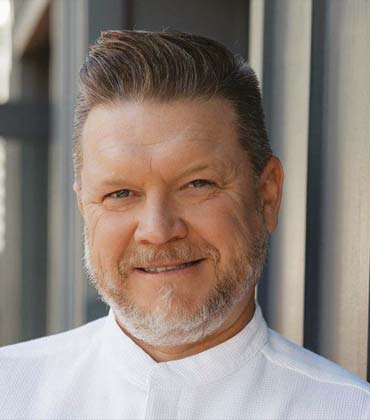
Michael Vaughn

Michael Vaughn

Every chef knows the moment. Mid-service, something jams, overheats or dies, and the instinct is to blame the equipment. “If we had better gear, this wouldn’t happen.” It’s the easiest conclusion to reach, and most of the time, it’s not that simple.

According to a recent analysis by Fortune Business Insights, the global commercial cooking equipment market reached $39 billion in 2025, reflecting the industry’s growing investment in advanced kitchen technology. While that investment is critical, improving efficiency often comes down to something far more fundamental.

I’ve worked in pristine, state-of-the-art kitchens and in ones where the walk-in door needed a full-body tackle to close. The difference was rarely the equipment. It was the culture, the flow and the standards of the team running it. A disciplined kitchen with aging equipment will outperform a chaotic kitchen with the newest toys every single day.

It Starts with Flow 

Equipment should support the operation. It should never be the glue holding it together.

Real efficiency starts long before anything is plugged in. It begins with flow, including how the line is set, how a cook moves, how many steps it takes to plate a dish, where bottlenecks form and where communication breaks down. I’ve seen kitchens lose entire tickets not because of equipment, but because the garde manger and hot line were fighting for the same six feet of space, or because a finishing station was positioned three steps too far from the pass. You can invest in the best combi oven on the market and still lose time if your team is crossing over each other, waiting on one station to catch up or re-firing dishes because communication broke down on the line.

The best kitchens I’ve led weren’t the most expensive; they were the most dialed in. And that comes from culture and strong leadership.

Culture as an Operating System 

A kitchen’s culture is its true operating system, the invisible architecture that determines whether a team survives service or actually grows through it. Real culture isn’t soft or generic; it’s built on intentional mentorship, positive pressure and the expectation of continuous growth. It means setting clear goals, coaching with purpose and giving cooks both the confidence to own their station and the courage to elevate it.

That might look like pulling a young line cook aside after service to walk through a missed pickup, not to call them out, but to help them understand timing, sequencing and how their station impacts the entire line.

Equipment should support the operation. It should never be the glue holding it together.

When people feel supported, challenged and trusted, they stop reacting and start thinking strategically. They master the rules of cuisine so they can eventually challenge them with precision and purpose. That’s where innovation begins. That’s where a team earns the right to live by, and share what I call: shuck conformity

In Hotels, The Stakes are Higher

In hotels, the kitchen carries an even bigger responsibility. It tells the story of the property. Every menu, every plate, every service moment shapes guest experience. If the story is coastal, fresh and local, the food must reflect that. If the brand is energy and community, the kitchen must move that way too. Equipment can enhance that story, but it cannot define it. For instance, this shows up when a menu promises hyperlocal seafood, but the dish feels generic, or when a high-energy restaurant is paired with a kitchen that can’t keep pace with service. Guests feel the disconnect instantly

Respect the Tools 

Maintenance and safety are part of that story as well. A wellmaintained workhorse will outperform a shiny new piece of equipment that no one respects. I’ve seen older ranges and ovens run flawlessly through peak service because the team respected them, cleaned them properly and knew how to work with them—while brand-new equipment failed within weeks due to neglect; their newness taken for granted. 

Safety isn’t a checklist; it’s a culture.  

The back-of-the-house operation is just as important to maintain as guest facing spaces, as it reflects the standards of the entire property. When cooks feel confident and proud in their space, just like the guest service team members, they move faster, cleaner and sharper. That shows up on the plate.

Technology: Tool or Noise? ​ 

Technology is another area where the industry tends to overcomplicate things. Some tools elevate the operation. Some just add friction. Digital ticket systems, for example, can streamline communication, but if they slow down ticket visibility or create confusion on the line, they do more harm than good. The question is simple: does it make the team better? Does it make the guest experience better? Does it streamline a process? If the answer is no, it’s noise.

The goal isn’t to build a perfect kitchen. It’s to build a resilient one: a kitchen that performs under pressure, adapts quickly, and empowers its people to deliver consistently. It is one where equipment supports the system rather than replaces it, where culture drives performance instead of panic, and where growth is expected, creativity is earned and excellence is repeatable. Because at the end of the day, equipment doesn’t create great service. People do.

And in hotels, those people aren’t just cooking. They’re shaping how a guest experiences a place, one bite at a time. The kitchens that perform the best are the ones where the team understands the system, trusts each other and knows how to adjust when things go sideways. The equipment supports that. It doesn’t save it. And if your walk-in still needs a kick every now and then, you’re probably doing just fine. 

The articles from these contributors are based on their personal expertise and viewpoints, and do not necessarily reflect the opinions of their employers or affiliated organizations.