

Thank you for Subscribing to Food Business Review Weekly Brief

Fyffes
Adriano Dia, Chief Marketing Officer
The Food Industry: Trends And Challenges
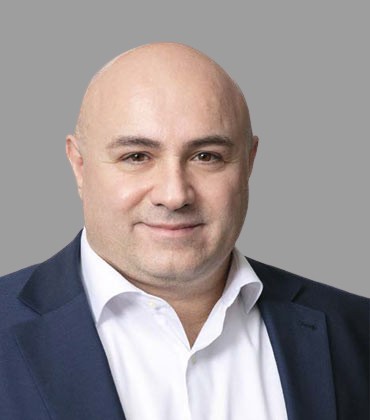
Adriano Dia
In an interview with Adriano Dia, Chief Marketing Officer at Fyffes, he outlines the current trends and difficulties of the food industry. He also talks about the latest project that has been working on recently along with the technological trends in the industry.
1. What are some of the major challenges and trends that have been impacting the Food Industry lately? The fresh produce industry has had very difficult moments, short term but also decades back. Bananas are the most consumed fruit in the world, and a trusted nutrition provider to every human. In fact, from the very childhood of being a baby to the ageing population across the globe, and in every moment in time, everyone enjoys the great taste of a banana, synonymous with being a healthy snack. But the reality shows that in the past +20 years, the industry has undergone a major value slump. It is only in recent years that prices have raised due to the domino effect of post COVID pandemic and the current situation in Europe. Furthermore, consumers are opting more and more for sustainable and organic solutions. And there is an answer to this demand: fair trade and organic bananas and the opportunity to further promote the great work behind this special grown exotic fruit. 2. What keeps you up at night when it comes to some of the major predicaments in the Food Industry? "I see opportunities to bring this wealth of knowledge closer to consumers and make bananas a more present fruit in consumers’ mind." Every single day, consumers all over the world can eat the best quality and nutritious bananas. However, I don’t see the whole value celebration of Bananeros on this side of the Atlantic nor in North America. Bananeros are highly skilled farmers, who plant, grow, and harvest bananas. They can read a banana stem, due to their long-standing experience with the fruit. And it is a tradition that many Bananeros pass on the baton to their family members, who succeed further. Thanks to their wealth of knowledge applied every day, bananas have become an irreplaceable fruit in more than 75% of all households. I see opportunities to bring this wealth of knowledge closer to consumers and make bananas a more present fruit in consumers’ mind. 3. Can you tell us about the latest project that you have been working on?
Deeply understanding our banana consumers is one of our top priorities. We want to delight them and ensure we meet their needs today and in generations to come. It is our agenda to more closely link bananas and sustainability. Every time we communicate, we draw out the relevance of sustainability. We are currently looking at options on how to make our famous blue Fyffes label ready for 2025.
4. What are some of the technological trends which excite you for the future of the Food Industry?
3. Can you tell us about the latest project that you have been working on?
Deeply understanding our banana consumers is one of our top priorities. We want to delight them and ensure we meet their needs today and in generations to come. It is our agenda to more closely link bananas and sustainability. Every time we communicate, we draw out the relevance of sustainability. We are currently looking at options on how to make our famous blue Fyffes label ready for 2025.
4. What are some of the technological trends which excite you for the future of the Food Industry? Before I joined Fyffes, I heard a lot about precision agriculture, though it was a very distant concept for me. My recent visit to our banana and pineapple farms in Costa Rica completely changed my perception and allowed me to understand, from a practical point of view, what precision agriculture means and how it will help Fyffes to achieve not only our 2025 sustainability goals, but also liaise with our partners to create next generation, modern farming. More concretely precision agriculture helps us to become more efficient and ecological in farming. The drone technology allows us to map our plantations, and measure the predicted output, through an algorithm, which is cross validated by our agronomist team. It is also a way to increase yield, because of the more effective usage of fertilizer. But all these technologies are only possible thanks to our strong technical and operational experts on the farms and in the pack houses.
The articles from these contributors are based on their personal expertise and viewpoints, and do not necessarily reflect the opinions of their employers or affiliated organizations.
