
Thank you for Subscribing to Food Business Review Weekly Brief


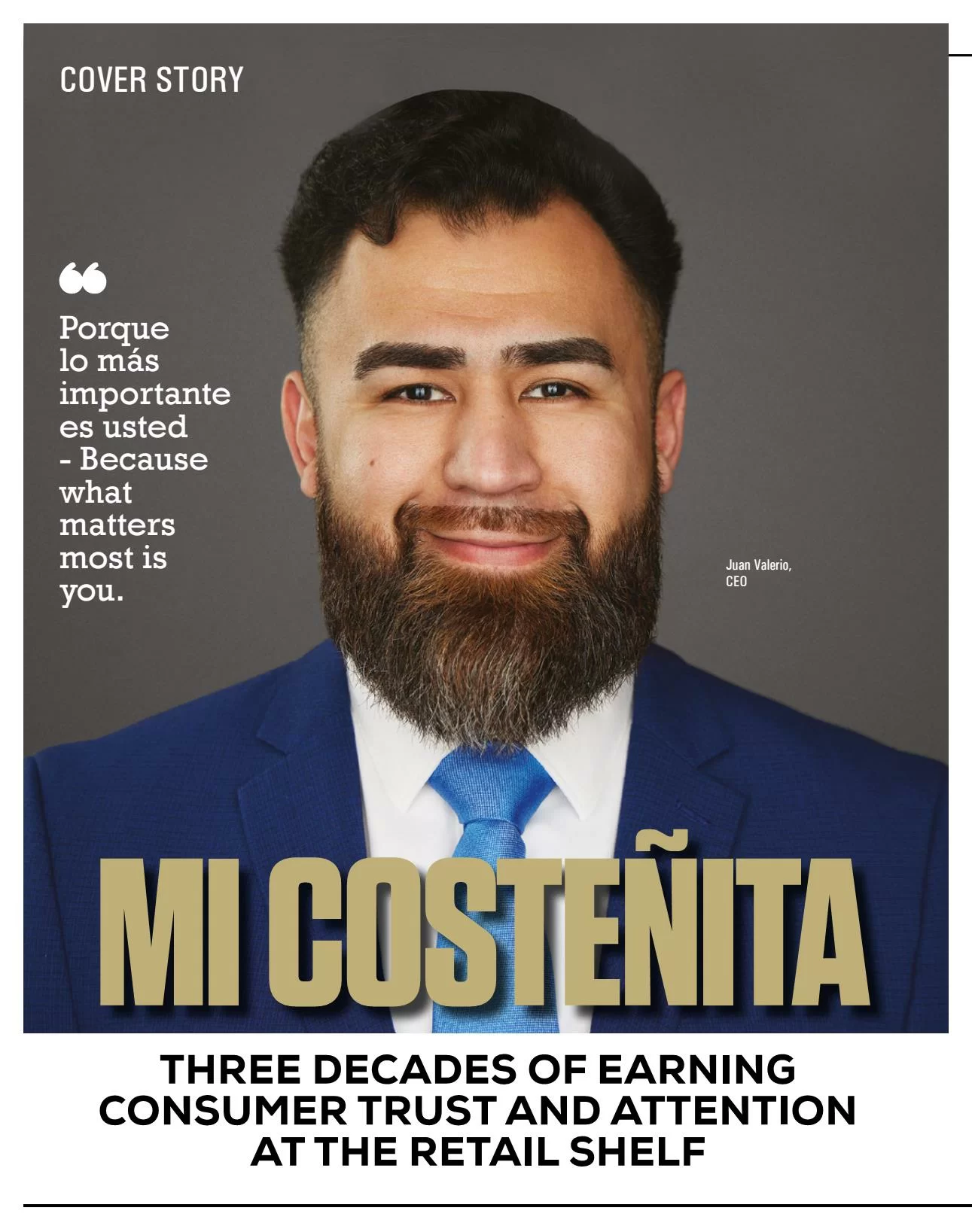
 Juan Valerio, CEO
Think of a customer at the food shelf in a retail store, scanning row after row for seasonings and pantry staples. That shopper has only a few seconds to decide whether a product feels worth taking home based on quality and presentation. When both align, the product earns the consumer’s confidence. In a crowded aisle where budgets are tight and choices are endless, that split-second trust is what keeps shoppers coming back.
That is exactly where Mi Costeñita earns its place on the shelf. The company supplies high-quality dried peppers, spices, seasonings, candies, snacks, and salsas to retailers across the country. About 80 percent of its customers are small, independent grocers, while the remaining 20 percent includes major chains such as Walmart, Albertsons, Kroger, Piggly Wiggly, and Heritage Grocers.
For the past thirty years, the company has operated with the belief that great pantry staples start with uncompromising quality and end with a product that looks as good as it is.
“Porque lo más importante es usted - Because what matters most is you,” says Juan Valerio, CEO of Mi Costeñita.
That commitment shows up in everything Mi Costeñita does, from sourcing only products that meet its standards, to designing bold, culturally rooted packaging, to keeping shelves stocked exactly when retailers need them.
When the company began in 1995, its lineup centered on a small selection of dried peppers, including chile guajillo, which helped put the brand on the map. Mi Costeñita set itself apart early by offering authentic Mexican varieties and clearly differentiating between types, a level of care not all competitors matched.
-
Porque lo más importante es usted - Because what matters most is you.
As the company stayed true to its standards, the range expanded from dried peppers such as chile de árbol and chile puya to herbs, spices, candies, and eventually a rapidly growing lineup of salsas, seasonings, and marinades. Today, that steady, quality-led growth has resulted in a complete range of pantry staples that support nearly any style of home cooking.
The same discipline is reflected in how Mi Costeñita serves its retail partners. In a market crowded with dried pepper and seasoning suppliers, the company differentiates itself in three clear ways. First, it never compromises on quality. Anything that does not meet its standards is rejected immediately, even if it means carrying no inventory. Second, it treats presentation with the same importance as the product itself, offering bright, culturally rooted packaging and custom in-store displays at no cost to retailers. Third, it prioritizes timely service, keeping shelves stocked and reducing the time between a retailer’s order and product delivery, because stores need to sell when consumers are ready to buy.
Retail partners see the results of this approach. Heritage Grocers, for example, has continued to expand its partnership with Mi Costeñita after experiencing the quality of the products and the reliability of the company’s service firsthand. That trust has grown steadily, opening the door to more stores and new opportunities.
The team remains focused on the end consumer, understanding that shoppers often have limited budgets and need to feel confident that quality products are still accessible at reasonable prices. When consumers feel confident buying from the shelf, retailers benefit, and the entire value chain stays strong.
Quality standards also guide how Mi Costeñita sources its products. The company works with a select group of trusted distributors, many based in the Chicago area, who handle importing and understand exactly what the brand expects. Some items are sourced through approved international suppliers, including partners in Peru, who consistently deliver the level of quality the company is known for. By working with proven suppliers over time, Mi Costeñita maintains the consistency that retailers and consumers depend on.
The company also manages its own distribution, giving retailers a single point of contact and clearer accountability. This approach strengthens trust and helps resolve issues quickly and directly.
As Mi Costeñita marks its thirtieth anniversary, it has made giving back a priority through charitable initiatives, community events, and sponsorships. The team credits its longevity to the communities that have supported the brand and views community investment as a core responsibility.
So, when a shopper pauses at the shelf and makes that split-second decision, Mi Costeñita is ready to earn that choice, just as it has for the past thirty years.
Building Reliability in Dried Chili Supply Chains
Why Consistency Matters in Specialty Food Supply
Senior leaders sourcing specialty food ingredients operate in an environment where consistency directly affects brand trust and retail performance. For dried chilies, variability in quality, appearance or availability can quickly undermine shelf confidence and disrupt consumer purchasing behavior. As retailers balance tight margins with rising expectations, supplier reliability is a strategic concern.
Decision-makers increasingly evaluate partners based on whether consistent quality can be maintained at a commercial scale. In this scenario, Mi Costeñita aligns sourcing, presentation and service around long-term shelf performance rather than short-term volume movement.
When Shelf Decisions Influence Brand Trust
Buyers typically reassess dried chili suppliers when products fail to convert at the shelf. Inconsistent sizing, unclear differentiation between varieties or packaging that does not communicate authenticity can erode consumer confidence in seconds. These challenges often surface as slow turns or increased markdown pressure.
Mi Costeñita addresses these by treating shelf impact as a primary consideration. Its emphasis on clearly differentiated chili varieties and culturally rooted packaging supports faster recognition and more confident consumer choice, reinforcing trust at the point of purchase.
How Quality Breakdowns Escalate Across Retail Operations
Quality issues in dried chilies rarely remain isolated. Inadequate sourcing standards or inconsistent screening can lead to uneven batches that complicate merchandising and inventory planning. Over time, these breakdowns affect retailer credibility and weaken repeat purchasing behavior.
Mi Costeñita mitigates this risk through uncompromising quality discipline. Products that fail to meet established standards are rejected outright, even when inventory pressure exists. This approach prioritizes long-term consistency over short-term fulfillment, protecting both retailer reputation and consumer trust.
How Mi Costeñita Supports Shelf Performance
Mi Costeñita functions as a shelf-focused supply partner rather than a commodity distributor. Its portfolio spans dried chilies such as guajillo, árbol and puya alongside herbs, spices, candies and salsas, enabling retailers to present a cohesive pantry offering.
Beyond product, the company provides custom in-store displays at no cost, supporting visibility and merchandising execution. By managing its own distribution, Mi Costeñita offers retailers a single point of accountability and predictable service timelines.
Evaluating Alignment With Retail Priorities
Assessing Mi Costeñita requires leaders to consider how strongly they value consistency, presentation and service reliability. The company aligns with retailers that prioritize long-term consumer confidence over short-term price optimization.
Its customer base, weighted toward independent grocers while also serving national chains, reflects an ability to adapt to varied retail formats without diluting standards.
Strategic Perspective on Dried Chili Partnerships
As consumer expectations around authenticity and quality continue to rise, dried chili sourcing demands disciplined partners. Mi Costeñita demonstrates how clear variety differentiation, strict quality controls and shelf-focused execution can strengthen retail performance.
For decision makers seeking dependable dried chili supply, Mi Costeñita represents an approach grounded in consistency, accountability and sustained shelf trust across diverse retail environments.
...Read more
Dried Chile Producers Info
Q1
What Do Dried Chile Producers Contribute to Retail Food Programs?
Dried Chile Producers help retailers offer pantry staples that depend on visual quality, variety clarity, consistent sourcing and dependable shelf availability. Their role goes beyond moving dried peppers into stores. They support consumer confidence by making products easy to recognize, properly differentiated and reliable enough for repeat purchase. In specialty food retail, Dried Chile Producers also help connect familiar cooking traditions with everyday shopping needs. The best programs account for how shoppers compare color, package cues and perceived authenticity before placing an item in the basket.
Q2
How Does Mi Costeñita Reflect the Role of Dried Chile Producers?
Mi Costeñita shows how Dried Chile Producers can combine product discipline with retail execution. Founded in 1995, it began with dried peppers such as chile guajillo and later expanded into chile de árbol, chile puya, herbs, spices, candies, snacks, salsas, seasonings and marinades. It rejects products that fall short of its standards, provides culturally rooted packaging and custom in-store displays, and manages its own distribution for clearer accountability. Its retail base spans independent grocers and larger chains.
Q3
Why Does Variety Differentiation Matter in Dried Chile Programs?
Clear variety differentiation helps shoppers understand what they are buying and how each chile may fit a recipe or household preference. For retailers, it reduces confusion at the shelf and supports a more organized specialty food section. Dried Chile Producers that distinguish varieties by appearance, naming and presentation can make the category easier to shop while helping stores build trust with consumers who expect authenticity and consistency. This is especially important when several peppers look similar to casual shoppers but serve different flavor or heat purposes.
Q4
What Quality Factors Should Retailers Consider When Evaluating Dried Pepper Suppliers?
Retailers should evaluate whether suppliers maintain consistent appearance, reject weak inventory, protect freshness and support dependable replenishment. Packaging should communicate the product clearly and withstand the realities of retail handling. Dried Chile Producers are often judged not only by the chile itself but by whether each shipment helps maintain the retailer’s credibility, shelf standards and ability to meet shopper demand without unnecessary disruption. Strong programs also show discipline when supply is tight, because inconsistent substitutions can weaken consumer confidence.
Q5
How Can Dried Chile Programs Support Shelf Performance?
A strong dried chile program supports shelf performance by balancing product reliability, attractive merchandising and timely restocking. Consumers often decide quickly, so packaging, variety recognition and perceived quality all influence whether an item moves. Dried Chile Producers that understand this shelf-level decision-making can help retailers reduce friction, present specialty ingredients with confidence and maintain continuity when demand changes or seasonal cooking patterns increase. Effective merchandising also turns a niche ingredient section into a more approachable destination for everyday home cooking.
Q6
What Makes a Dried Chile Supply Partnership Sustainable?
A sustainable partnership depends on quality discipline, sourcing consistency, responsive service and shared attention to the end consumer. Price matters, but weak presentation or inconsistent supply can undermine repeat purchasing. Dried Chile Producers that support retailers over time through reliable distribution, clear product standards and practical merchandising help protect consumer trust while giving stores a stronger foundation for long-term category growth. Durable partnerships also require accountability when issues arise, since retailers need fast answers as much as they need consistent product.
Company :
Mi Costeñita
Management Juan Valerio, CEO
Description
Mi Costeñita is a trusted supplier of high-quality dried peppers, spices, herbs, seasonings, salsas, snacks and candies, serving both independent grocers and major national chains. For thirty years, the company has built its reputation on uncompromising quality, strong presentation, reliable service and a consumer-first approach that keeps retail shelves moving.