

Thank you for Subscribing to Food Business Review Weekly Brief


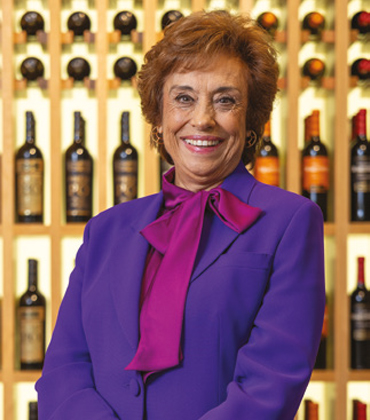 Leonor Freitas, President of the Board of Directors
For over a century, Casa Ermelinda Freitas has remained committed to providing wines that meet consumer preferences at affordable prices, without compromising quality. As one of Portugal’s leading wineries, it draws on a rich family legacy and deeply held generational values, translating them into disciplined winemaking that delivers consistent quality across 24 millions of litres each year.
How does vineyard stewardship influence long-term wine quality and consistency?
Quality that begins in the vineyard defines Casa Ermelinda Freitas. The estate has expanded from 62 to more than 550 acres, yet its philosophy remains unchanged. Even with an annual production of 24 million litres, the winery maintains a hands-on, family-driven approach anchored in authentic viticulture principles and uncompromising vineyard investment, resulting in wines of consistently high quality.
This standard is reflected across its diverse portfolio of proprietary brands. Dona Ermelinda stands as the flagship, complemented by well-established labels such as Leo d’Honor and Terras do Pó.
“Every vintage is crafted with the consumer in mind. Without them, we are nothing,” says Leonor Freitas, President of the Board of Directors.
How has leadership continuity shaped the winery’s strategic direction?
Founded in 1920, the winery’s success is built on consumer-first thinking and strengthened by a rare continuity of women-led leadership in a traditionally male-dominated industry. Dona Ermelinda Freitas, the founder’s granddaughter and namesake of the winery, played a formative role in its development. Under the leadership of her daughter, Leonor, the company has expanded its international presence, with the next generation now preparing to carry this legacy forward.
Quality-First Approach at its Core
What regional conditions contribute to the vineyards’ grape characteristics?
Without exceptional grapes, great wine is impossible. Located approximately 45 kilometres south of Lisbon, the vineyards are tended with meticulous care to produce healthy fruit. The vineyard-first approach is shaped by a region known for centuries of winemaking, recognised as early as Roman times for its natural suitability for vines.
-
Every vintage is crafted with the consumer in mind. Without them, we are nothing.
Nature completes what history began. Sandy soils provide excellent drainage, allowing vines to regulate water uptake and balance ripeness, acidity, and tannin. Long hours of sunlight build structure, while night-time humidity, carried in from rivers, preserves aromatic freshness and lifts flavour intensity, creating expressive wines. An 11-meter-deep underground water table ensures steady vine hydration, supporting consistent quality across vintages.
Stewardship of a Timeless Legacy
The harmonised terroir enables Casa Ermelinda Freitas to cultivate over 30 grape varieties, with Castelão serving as its primary identity and regional signature. International varieties such as Syrah and Malbec, along with several others, contribute to a portfolio that appeals to diverse palates across Europe, the U.S., and beyond.
Dona Ermelinda Reserva is primarily composed of Castelão sourced from the estate’s oldest vineyards that are 65 to 70 years old. It translates the character of the land into a wine that carries the history of Casa Ermelinda Freitas in every glass.
How did market shifts influence the winery’s portfolio expansion?
Consumer needs guide every decision. The winery’s most popular Bag-in-Box wines are crafted for everyday enjoyment. Unlike a bottle, where exposure to air can alter flavour once opened, Bag-in-Box allows wine to be poured glass by glass, while preserving aroma and taste.
Casa Ermelinda Freitas’ entry into the bottled wine market was born out of necessity. When its bulk buyer withdrew, the family was left with nearly a million litres and no outlet. Bottling became the survival path, bringing their wines directly to consumers—into their celebrations, gatherings and shared moments. This marked the beginning of its branded portfolio.
Since 1999, the winery’s expanding range of brands has demonstrated that high quality and scale can coexist, earning more than 2,500 awards. Select wines have achieved 97-point scores and Platinum medals at the Decanter World Wine Awards. For the team, such recognition is not a finish line but a reminder that every bottle must uphold the standard.
Casa Ermelinda Freitas stands as a testament to consumer-focused, quality-driven winemaking that celebrates timeless craftsmanship.
The Discipline behind Scalable Fine Wine Production
Executives responsible for sourcing fine wine face a market defined by contraction in traditional consumption, generational shifts in drinking habits and heightened scrutiny around value. Premium positioning alone no longer guarantees demand. Buyers require producers that can preserve identity, control quality at scale and adapt to diverse international preferences without eroding brand equity. The distinction between industrial volume and artisanal scarcity has narrowed, placing greater emphasis on how consistently a producer can translate vineyard character into commercial reliability.
The foundation of any credible fine wine house remains the vineyard. Quality does not begin in the cellar but in the field, where grape selection, cultivation discipline and long-term land stewardship determine what is possible in the bottle. Producers that treat vineyard investment as a strategic priority rather than a cost center tend to show greater stability across vintages. This approach requires sustained capital allocation toward plant health, yield management and site-specific practices that respect natural conditions rather than override them. In an era of climate variability and margin pressure, that level of discipline distinguishes producers capable of delivering both scale and integrity.
Scale itself is not disqualifying in fine wine. Annual output in the tens of millions of liters demands process control and logistical sophistication, yet volume must not dilute character. The more compelling producers are those that expand acreage while maintaining continuity in philosophy. Growth measured in deliberate steps, rather than rapid acquisition, often signals internal alignment between generations and a shared standard of quality. Continuity of leadership and heritage can reinforce buyer confidence, particularly when ownership remains directly involved in production oversight.
Terroir differentiation further shapes competitive positioning. Sandy soils with accessible underground water reserves, combined with strong daytime sun and cooling night humidity, create conditions that support concentration alongside freshness. Such environments enable wines that carry both body and aromatic lift. When a producer can articulate how soil composition and microclimate translate into flavor profile, it signals technical command rather than marketing abstraction. That technical clarity matters to distributors and retail executives who must position wines within defined style segments across markets.
Adaptability also influences purchasing decisions. International buyers operate across consumer cultures that favor different expressions of sweetness, body and structure. A producer with a broad portfolio of grape varieties and aging formats can tailor blends to regional demand while retaining a core identity. Adaptation, when anchored in estate-grown fruit and internal vinification control, allows commercial flexibility without outsourcing character. The ability to maintain quality across bottled formats and alternative packaging further reflects process confidence.
Heritage remains relevant when it informs present execution rather than serving as ornament. A multigenerational estate that has evolved from bulk supply into branded bottling demonstrates strategic resilience. When leadership transitions are handled internally and stewardship remains concentrated, buyers gain a clearer line of accountability.
Within this landscape, Casa Ermelinda Freitas stands out for uniting estate scale, indigenous varietal focus and disciplined vineyard investment under family governance that dates back to 1920.
It has expanded from modest acreage to more than 500 acres while preserving a consistent quality ethos. Approximately 60 percent of its plantation centers on Castelão, anchoring a portfolio that reflects regional identity alongside international varieties. Its sandy terroir, extensive grape diversity and controlled production of roughly 22 million liters annually position it to serve varied markets without relinquishing character. For executives prioritizing sustained quality, heritage continuity and adaptable portfolio depth, it represents a compelling benchmark in fine wine production.
...Read more
Fine Wine Producer Info
Q1
Why is Casa Ermelinda Freitas considered among top fine wine producer companies?
Casa Ermelinda Freitas is considered among top fine wine producer companies because it has built a century long legacy around quality driven Portuguese winemaking while maintaining family ownership across five generations. Founded in 1920 in Fernando Pó, Portugal, the winery cultivates more than 550 hectares of vineyards and has received thousands of international wine awards. Its recognition as “Top Fine Wine Producer in Europe 2026” further reflects its long standing influence within premium wine production.
Q2
How does Casa Ermelinda Freitas differentiate its approach as a fine wine producer?
A vineyard first philosophy defines its approach. Casa Ermelinda Freitas focuses heavily on terroir, grape quality and controlled vineyard management before the winemaking process begins. Its fine wine producer model combines traditional Portuguese grape varieties such as Castelão with international varieties including Syrah, Merlot and Pinot Noir, allowing the winery to produce wines with both regional identity and international appeal.
Q3
How does the company support consistency across its wine portfolio?
Integrated vineyard management and long term winemaking expertise shape its production model. Casa Ermelinda Freitas works with more than 30 grape varieties while maintaining close control over cultivation, harvesting and bottling operations. Its fine wine producer capabilities are supported by winemaker Jaime Quendera, whose work has contributed to international recognition across multiple wine competitions and premium wine categories.
Q4
What value does Casa Ermelinda Freitas deliver as a fine wine producer?
Consistency, accessibility and regional authenticity define the value delivered. Casa Ermelinda Freitas develops wines designed to balance premium quality with broad consumer appeal across international markets. Its fine wine producer philosophy emphasizes wines that express the characteristics of the Setubal Peninsula while remaining approachable across multiple styles including reds, whites, rosés and fortified wines such as Moscatel de Setubal.
Q5
What role do awards and international recognition play in the company’s reputation?
International recognition plays a major role in strengthening the winery’s global positioning. Casa Ermelinda Freitas states that its wines have received more than 900 international awards, while other industry sources cite over 2,000 global recognitions including Platinum medals at the Decanter World Wine Awards and high scoring vintages across major wine competitions. These achievements reinforce its standing within the fine wine producer category.
Q6
Why is Casa Ermelinda Freitas relevant in today’s wine industry?
Wine consumers increasingly seek producers that combine authenticity, heritage and quality consistency. Casa Ermelinda Freitas addresses this demand through a fine wine producer model built around family leadership, regional identity and long term vineyard investment. Its ability to scale production while maintaining premium wine standards positions the winery within a global wine market increasingly focused on provenance, craftsmanship and award winning quality.
Company :
Casa Ermelinda Freitas
Management Leonor Freitas, President of the Board of Directors
Description
For over a century, Casa Ermelinda Freitas has united heritage, terroir and disciplined winemaking to deliver consistent, high-quality wines at scale. With more than 550 acres, an annual production of 24 million liters, 30 grape varieties and women-led stewardship, it offers an award-winning portfolio shaped by authenticity, consumer-first values and exceptional vineyard investment.