
Thank you for Subscribing to Food Business Review Weekly Brief

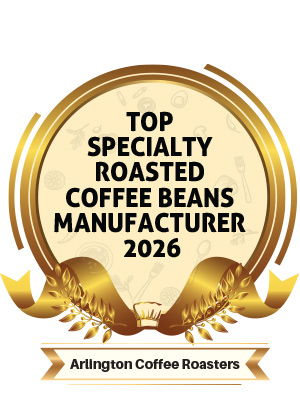
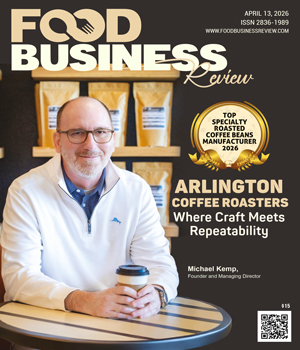
How does operational precision help specialty coffee roasters deliver consistent flavor experiences? “A coffee can change for dozens of small reasons; shifts in airflow, heat, or bean sourcing. And customers will notice,” says Michael Kemp, founder and managing director of Arlington Coffee Roasters. That awareness shapes how the company operates. As a locally owned roastery in the heart of Arlington, Kemp has seen how quickly small shifts can alter the experience regular customers have with their coffee. Rather than accept variation as part of the craft, he built Arlington for precision. Stability begins at the origin, where long-standing sourcing relationships reduce fluctuation before beans even arrive. From there, computer-generated roast profiles guide each batch, supported by equipment oversight that keeps heat and airflow steady. And with roasting done on-site and the same beans served across café, retail and wholesale channels, consistency becomes part of the daily operation — not an afterthought. “We want customers to get the same flavor every time,” says Kemp. “When they buy coffee from us, they should know what they’re getting. If something’s off, we fix it. That’s part of earning their trust.” From Sourcing Stability to Roast Control What processes help coffee roasters maintain stability from bean sourcing to roasting? Arlington’s sourcing network spans single-origin beans from Ethiopia, Costa Rica, Brazil, Indonesia, Colombia, Guatemala and Mexican Chiapas. Among them, Brazilian and Mexican Chiapas beans rank as top single-origin sellers and also appear in Arlington’s core blends, including Espresso Seven and Arlington Blend.
Top Private Label Supplement Manufacturer 2026
What defines IVC’s role behind trusted supplement brands? A nutritional supplement bottle rarely carries the manufacturer’s name. It carries the brand that consumers trust. Yet behind many of those bottles is a company whose decisions shape the product long before it reaches a shelf. For International Vitamin Corporation (IVC), a U.S.–based Global CDMO and private-label manufacturer of dietary supplements, that difference defines its role. “Many times, we’re looked at as just a manufacturer,” says John Torphy, CEO. “I look at us as a strategic wellness partner. A one-stop shop with the resources to help customers develop products from start to finish.” With over seven decades in vitamins, minerals and nutritional supplements, IVC built its model around end-to-end capabilities that support retailers, private-label programs and branded wellness companies. Product ideation, formulation, ingredient sourcing, quality testing, manufacturing, packaging and logistics sit within one coordinated system, eliminating the need to manage multiple partners to bring tablets, capsules, softgels, gummies and powdered formats. How does IVC structure collaboration around customer objectives? Every internal decision run through simple questions—how does this help the customer? Will it reduce time, lower cost, improve efficiency or raise quality? That lens allows IVC to play a more strategic role, helping customers determine not only how to manufacture products effectively, but which products make the most sense to bring to market next..

Commercial Food Service Equipment Repair Services
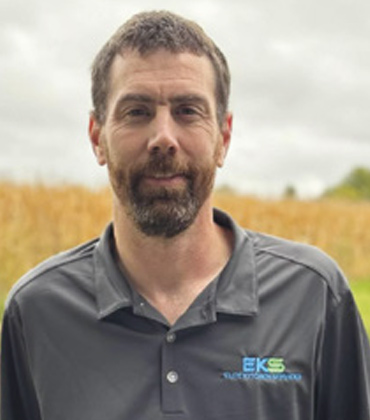
In the restaurant business, a well-functioning kitchen is the backbone of success. When equipment breaks down, every minute counts. That’s where Elite Kitchen Services (EKS) steps up. Founded by Adam Roberts, EKS is built on a simple but powerful idea: to provide restaurant owners with a one-stop solution for kitchen equipment repairs, maintenance, and installations. Instead of dealing with multiple vendors for different issues, restaurant owners can rely on EKS to handle everything—from hot-side cooking equipment to refrigeration, HVAC, exhaust systems, and even minor plumbing and electrical work. “I wanted to create a company where restaurant owners didn’t have to call five different service providers to fix their kitchen,” Roberts explains. “With EKS, they make one call, and we take care of everything.” A Full-Service Approach to Kitchen Maintenance EKS isn’t just about repairs—it’s about keeping restaurants running smoothly and efficiently. The company offers preventive maintenance to help businesses avoid costly breakdowns and unexpected downtime. If an issue does arise, EKS technicians are trained to diagnose and repair both hot-side and cold-side equipment, ensuring clients don’t have to wait for a specialist to be available. Roberts has always believed that having highly trained technicians is key to providing top-tier service. “I don’t want a team where one guy only knows refrigeration and another only knows ovens,” he says. “I want every technician to be able to work on everything.” While some specialization is inevitable, EKS ensures that its team is cross-trained so they can handle a wide range of equipment and minimize delays for customers. Beyond repairs and maintenance, EKS also sources and installs commercial kitchen equipment. The company has the capability to order appliances, inspect them at its warehouse, and deliver them directly to clients. This hands-on approach gives restaurant owners peace of mind, knowing their equipment is installed properly and ready to perform.
Cloud-Based Aerobic Food Digester Solution Of The Year 2026
Commercial kitchens and galleys generate enormous volumes of food waste every day. In large-scale operations such as cruise ships, hospitals, universities, and corporate campuses, discarded food is measured in tons. This creates logistical, financial, and environmental burdens that extend far beyond the kitchen. When this waste is hauled to landfills, it decomposes anaerobically and releases methane, a greenhouse gas far more potent than carbon dioxide. For organizations facing increasing pressure to reduce emissions, control costs, and document environmental performance, food waste has become an operational issue that can no longer be ignored. This is the challenge Recoup Technologies has solved. Through its BioHiTech line of aerobic food waste digesters, Recoup provides organizations with a practical, in kitchen solution that addresses food waste at the moment and where it is created. The Recoup Biotech Digester reduces dependence on hauling and landfill disposal, lowers associated emissions, and replaces antiquated waste-handling practices with measurable, data-backed outcomes. As a result, Recoup has become a technology partner for many organizations seeking sustainability gains alongside operational clarity and financial efficiency. Founded to solve food waste at its source, Recoup applies a proven biological process known as controlled aerobic digestion to the problem of waste practices historically managed through transport, storage, and disposal. Unlike landfill-bound waste streams, where food decomposes in oxygen-free environments and produces methane, Recoup’s digesters use oxygen-rich microorganisms similar to those used at waste water treatment plants that rapidly break food waste down into liquid effluent suitable for sewer discharge. This creates a closed, on-site process that entirely removes food waste from the landfill pathway.

CXO INSIGHTS

The Power of Connection in Restaurant Equipment Success
Scott Sayre, Branch Manager Bend, Curtis Restaurant Equipment
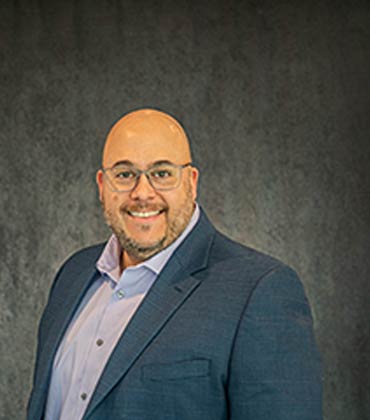
Redefining Food Safety in School Nutrition
Jason Schwartz, Director of Safety and Risk Management, Southwest Foodservice Excellence (SFE)

Food Safety Auditing: What are the Actual Gains?
Gina M. Cullerton, FSQA Manager, Clemens Food Group

Building Credibility in Foodservice Marketing
Nils Schaede, Marketing Director, Zentis North America

Enhanced Precision Agriculture Using Cloud Based Ai
Enrique Leon, Ai Enterprise Architect, American Sugar Refining

IN FOCUS

Digital Transformation Redefining Private Label Supplement Manufacturing
Digital transformation enables food business supplement manufacturers to meet evolving consumer expectations, enhance traceability and sustain competitive growth.
Brewing Excellence: The Rise of Specialty Roasted Coffee
Specialty roasted coffee bean manufacturers must adapt to trends, ensure sustainability, and perfect roasting processes to meet evolving consumer expectations.
EDITORIAL
Integrated Execution In Modern Food Systems
The food industry is increasingly defined by operational precision, supply chain control and accountability at scale. In this edition of Food Business Review, we examine how companies are refining execution across production, safety and customer experience to deliver consistency in a highly variable environment.
Our cover story, Arlington Coffee Roasters, exemplifies this shift through its disciplined approach to repeatability. Recognized as the Top Specialty Roasted Coffee Beans Manufacturer 2026, the company has built its model around controlling variability from sourcing to roasting. By combining long-term origin relationships with computer-generated roast profiles and strict operational oversight, Arlington ensures flavor consistency across cafe, retail and wholesale channels. Even minor disruptions, such as airflow changes during maintenance, are recalibrated through data-driven adjustments, reinforcing a system in which consistency is actively managed rather than assumed.
In parallel, International Vitamin Corporation (IVC), recognized as the Top Private Label Supplement Manufacturer 2026, demonstrates how integration drives scale and reliability in adjacent sectors. Operating as a global CDMO, IVC consolidates formulation, sourcing, manufacturing, testing and logistics within a single system. This eliminates fragmented handoffs and enables faster, more accountable execution. Its customer trinity model and unified quality framework allow brands to align product strategy with operational feasibility, balancing cost, compliance and scalability from the outset.
Leadership perspectives further ground these themes in execution. Christopher Hammond, Corporate Director of Food & Beverage at Kalahari Resorts & Conventions, emphasizes that team capability and cross-functional expertise define successful catering operations, where every detail contributes to the guest experience. Complementing this, Jason Schwartz, Director of Safety and Risk Management at Southwest Foodservice Excellence, underscores that food safety must be embedded as a core operational value, reinforced through training, technology and daily practice, rather than treated solely as compliance.
Together, these stories highlight a clear industry direction: disciplined systems, integrated execution and leadership-driven accountability. We invite readers to explore how these models are shaping the next phase of food business operations.
