

Thank you for Subscribing to Food Business Review Weekly Brief
![UNFI [NYSE:UNFI]: Meeting the Shelf-Level Needs of Modern Food Retail](https://www.foodbusinessrevieweurope.com/uploaded_images/1573-zvo95.jpg "UNFI [NYSE:UNFI]: Meeting the Shelf-Level Needs of Modern Food Retail")
Conventional grocery supply comes down to a practical question: can the retailer keep the right products available, priced sensibly and relevant to the shoppers walking the aisles that week? Staples matter. So do frozen items, dairy, fresh categories, private-label choices and products that help a store stand apart from the larger chain down the road. UNFI [NYSE:UNFI] thrives in this space as a wholesale food distributor serving retailers and suppliers with natural, organic, conventional and specialty products. Its strength lies in the conventional food supply business, which provides retailers with broad access to grocery, frozen, dairy and fresh products, helping retailers maintain a dependable assortment while adjusting to local demand, category shifts and supplier opportunities. The company’s role is not limited to moving cases through a distribution network. Its product platform gives retailers access to a wide assortment across categories, while its programs and supplier relationships help turn that assortment into practical shelf-level merchandising relevance. That is where conventional food supply becomes more than availability. It becomes the work of helping retailers build assortments and compete. “At UNFI, we’re focused on adding value for our customers and suppliers through products, programs, and services that help them differentiate and grow profitably. This recognition reflects the strength of our partnerships and the progress we’re making as we continue building capabilities to support shared growth across the food retail industry,” says Louis Martin, President of Conventional Grocery Products and UNFI Chief Commercial Officer.
![UNFI [NYSE:UNFI]: Meeting the Shelf-Level Needs of Modern Food Retail](https://www.foodbusinessrevieweurope.com/newstransfer/upload/39-2a3tl-.jpg "UNFI [NYSE:UNFI]: Meeting the Shelf-Level Needs of Modern Food Retail")
F&B Supplier and Distributors
Starting a business in a new country meant building operations, relationships, and stability from scratch. After immigrating from Hong Kong in 1997, Scott Suen started S.J. Distributors LLC as a food delivery business in 2005, and Jenny Lin joined the company following its incorporation two years later. The early years revealed to them the challenges many small businesses face, particularly immigrant-owned restaurants and independent operators working to establish themselves locally. The experience gained later influenced how it approached customer support as it expanded. Starting small, the business grew step by step into multiple states, becoming a supplier that reliably kept restaurants stocked and made deliveries easier to anticipate. As it maintained close ties with family operations and standalone kitchens, much of the company’s client base carried regional food traditions into their communities. While managers communicated often about stock levels and menu needs, those exchanges gave them better insight into shifting order patterns. Over time, trust was built slowly through consistent showing up, effective communication, and recognition of how tough daily kitchen logistics can be. Today, most S.J. Distributors' clients run small businesses, often led by immigrants who serve diverse populations across the U.S. The company’s strategy emphasizes close collaboration with restaurant owners, timing deliveries to align with cooking routines, and listening to daily demands rather than ignoring them. This approach keeps specialty items and foods tied to specific cultures within reach, helping maintain supply lines aligned with real-world kitchen operations. “We see ourselves as a bridge between global food cultures, local businesses, and the communities we serve,” says Jenny Lin, CEO..

Meat
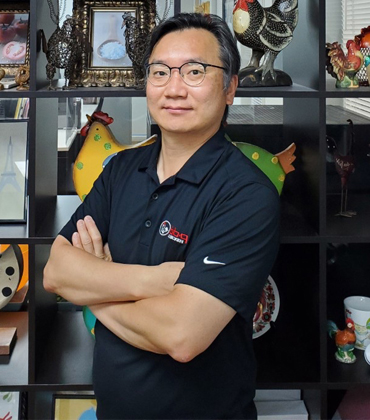
Global audiences are increasingly drawn to cultural experiences, with food emerging as one of the most immediate and accessible entry points. bb.q Chicken USA positions itself within this shift not just as a restaurant brand, but as a conduit for experiencing, interpreting, and sharing Korean culture. Through its distinct approach to Korean fried chicken, the company invites consumers into a broader sensory and social tradition defined by texture, flavor, and the communal nature of dining. From its inception, bb.q Chicken has treated its craft as more than the preparation of food. Korean fried chicken, with its delicate balance of crispiness and layered seasoning, becomes a vehicle for storytelling, an introduction to the rhythms and nuances of Korean culinary philosophy. It reflects not only taste preferences, but also the cultural context in which food is enjoyed, shared, expressive, and deeply rooted in tradition. Within this framework, what began as a modest Korean chain has evolved into an international presence, extending that cultural narrative across borders. “Beyond the customer perspective, I’d love the story to highlight how bb.q Chicken brings Korean culture to life through food,” explains a bb.q representative. “As K-dramas and K-pop have gained global attention, we’ve seen the same happen with Korean food. Korean fried chicken has become one of the easiest and most enjoyable entry points for people who are curious about Korea.” This ethos has guided every aspect of bb.q’s operations, from menu development to the design of each restaurant. The company views every order not as a transaction, but as an opportunity to share a piece of Korean identity..
Food Service Equipment
Successful culinary workspaces are harvesting the fruit of seamless equipment operations— Thanks to Santos Technical Services for ensuring all of their chef’s gears fire up without fail. An authorized and certified service provider for leading foodservice equipment brands, the company has become the hot ticket in the world of eateries for upholding proactive equipment care over reactive repairs. Its quick response time and competitive pricing have gained the trust of various establishments, including fast-food chains, restaurants and coffee shops. The kitchen might be the heart of the restaurant, but nothing disturbs service faster than a broken appliance. Santos Technical Services’ expert maintenance and repairs mean no delays or disruptions—just seamless operations all day long. From the morning rush to the last call of the night, service progresses as planned, and the kitchen never skips a beat. “Our customer-centricity helps build strong partnership with our clients, allowing them to benefit from exceptional service that keeps their kitchen equipment running in optimal condition,” says Reginaldo Santos, president. “We are a response to the industry’s demand for skilled professionals who can diagnose and sew up high-tech appliances.” In the foodservice industry, a malfunctioning diary dispenser or an outdated system can lead to costly downtime and inflate energy bills. The company helps clients avoid unexpected breakdowns and increased operational costs through repair services, scheduled maintenance programs and advanced diagnostics. From fast-cooking ovens and toasters to espresso machines, refrigeration units and water filtration systems, its team repairs every piece of equipment without a hitch. The company is a proud Commercial Food Equipment Service Association (CFESA) member and an authorized service provider for a range of highly distinguished brands, including BUNN, TurboChef, ACP Inc., Pentair and Manitowoc. Santos Technical Services’ certifications with Schaerer, Eversys and Carter-Hoffmann demonstrate its unwavering commitment to delivering high-quality service while preserving the integrity of the equipment’s warranty. Dedicated associates swiftly respond to service calls and gather necessary equipment information, including its type, nature of service and location. Technicians are then notified to resolve the issue and conduct follow-ups to confirm that no additional problems are anticipated. By tracking repair history and usage patterns and leveraging company vans equipped with essential parts of major brands, they ensure that most challenges are solved right off the bat.

F&B Supplier and Distributors

DuraFry Solutions International LLC is reshaping how restaurants manage their frying oil. With a patented powder and advanced filtration systems that are FDA- and NSF-approved, the company helps operators extend oil life while preserving the quality and consistency of every batch. What distinguishes DuraFry is the way it works alongside its customers. The team begins by assessing each kitchen’s challenges on-site, and then incorporates its technology into everyday operations in a way that fits existing workflows. Staff receive direct training on proper use and DuraFry continues to monitor results over time, ensuring improvements hold steady. This approach turns product adoption into a lasting partnership built on reliability and trust. The impact is immediate. Operators benefit from lower costs and fewer disruptions, with the confidence that every meal remains consistently fresh and safe. Central to this process is DuraFry’s proprietary powder, a blend of magnesium silicate and diatomaceous earth. These minerals work together to capture impurities and purify oil until it is nearly crystal clear. Extending oil life also lowers smoke levels, prevents residue buildup and minimizes the use of harsh cleaning chemicals, improving both food quality and working conditions. “Our aim is to help operators serve the best possible food safely and sustainably while reducing the wastage of oils,” says Michael Aoun, co-founder and CEO. Aoun’s perspective is grounded in experience. As a lifelong restaurateur, he ran a festival food operation across U.S. cities and often replaced oil on a daily basis. By the end of one summer, hundreds of discarded jugs were stacked in storage. That waste reflected a widespread problem in food service where vegetable oil rarely lasts beyond three days and beef tallow seldom beyond five without effective filtration. Relying on sight or smell left operators with high costs and unpredictable food quality. To solve this, Aoun joined forces with chemist Bill Trent in 2017 to create what became the patented DuraFry powder. The breakthrough transformed oil management, extending the lifespan of soy oil to 12–14 days and beef tallow to 22. Just as importantly, the approach brings consistency to frying, delivering food that tastes fresher for longer periods. Extending oil life is only half the story. Kitchens also need certainty about when oil should be replaced. To provide that assurance, DuraFry integrates a German-engineered Testo probe that measures total polar materials, the most reliable marker of oil degradation. In the European Union, oil above 25 percent TPM must be discarded as unsafe. While no such regulation exists in the U.S., it encourages operators to adopt these scientific benchmarks voluntarily, raising safety and quality standards across the board.
Food Service Management
Campus dining now operates in a moment of choice. At lunchtime, students weigh delivery apps, nearby restaurants and an expanding mix of on- and off-campus retail options. Every decision carries weight. When students choose to eat elsewhere, it means lost connection, weaker campus engagement and a tangible loss in dining revenue. Elior Collegiate Dining builds its model around that shift, helping universities redesign a system historically built on captive meal plans into one that actively earns student participation. Instead of relying on a standard institutional approach, each program begins with student preferences. Live cooking stations, global cuisine counters, plant-based sections, cafés and retail-style outlets are designed around how students choose to eat. Participation becomes the system driver, shaping experience, retention, revenue and long-term program viability. “We want to meet students where they are,” says Candace Hogan, senior vice president of growth, “not try to make them meet us where we are.”

F&B Supplier and Distributors

Advantages of Food Delivery Services for Restaurants
Landon Wells, International Training and Development Manager, Slim Chickens
Organic Food

The Digital Age of Food Safety and Quality
Jorge Hernandez, Quality Assurance VP, the Wendy’s Company [NASDAQ : WEN]
Food Logistic and Transportation

Inventory Management and Strategic Planning
Larry Williams – Chief Supply Chain Officer at Biscuitville Fresh Southern
Foodservice Equipment

Two Decades of Innovation: The Evolution and Trade of Commercial Kitchen Equipment Technology
John Bettiga, Manager of Performance Tools and Techniques, Whataburger
Food and Beverages Marketing

Building Credibility in Foodservice Marketing
Nils Schaede, Marketing Director, Zentis North America
Cold Chain

Building Resilient Supply Chain Systems That Enable Sustainable Restaurant Growth
Mohammed Sayad, Supply Chain Director, Flavor Hive
Meat

Consistency Served Hot
Tee McCluster, Head of National Corporate Facilities at KFC

IN MY OPINION
Food Processing and Packaging
Succeeding Together: The Collaborative Path to Quality Success
Jenny Dresse, Vice President of Quality, Finlays America, Finlays Solutions
LAST WORD
Organic Food
Why the Food Industry Needs More Translators, Not Just Specialists
Sarah Engstrom, Corporate Microbiologist, Grande Cheese Company
IN FOCUS

Overcoming Challenges: Sparkling Beverage Industry Insights
Sparkling beverage producers face cost, innovation, and operational challenges while pursuing sustainable growth and profitability.
Innovative Formulations: How Ice Cream Ingredient Manufacturers Drive Market Success
Ingredient manufacturers enhance innovation, efficiency, reliability, and long-term business value across the frozen dessert industry.
EDITORIAL
Delivering Food Retail with Precision and Purpose
As retailers, suppliers and foodservice operators navigate shifting consumer preferences and increasingly complex supply networks, the ability to deliver consistent products, maintain availability and respond quickly to change has never been more critical. This edition of Food Business Review explores how organizations are strengthening food systems through disciplined execution, collaborative partnerships and integrated approaches to quality and supply chain management.
Our cover story recognizes UNFI as the Top Conventional Food Supplier 2026. The company has built a model that allows grocers to execute consistent assortments within the grocery, frozen, dairy, and fresh categories and meet current local and shopper needs. Through supplier partnerships, merchandising support, category expertise and a distribution network designed for reliability, UNFI enables retailers to differentiate their offerings and strengthen the in-store experience.
This edition also recognizes bb.q Chicken USA as the High-quality Fried Chicken Products of the Year 2026. The company has expanded the global reach of Korean cuisine through a disciplined commitment to authenticity, franchise training and product innovation, demonstrating how cultural relevance and quality can coexist at scale.
S.J. Distributors LLC, recognized as the Wholesale Food Supplier of the Year 2026, has adopted a delivery framework modeled for individual restaurants that includes cold chain, transparency, support for multiple languages and a reliable team of suppliers.
This issue also features perspectives from executives on the trends, challenges and opportunities shaping the industry today. Jenny Dresse, VP of Quality at Finlays America, highlights the importance of cross functional collaboration, supplier engagement, customer feedback and transparent communication in building resilient quality management systems.
Sarah Engstrom, Corporate Microbiologist at Grande Cheese Company, explores how better communication across technical, operational and commercial teams can reduce friction, improve decision making and prevent costly misalignment as organizations grow.
The organizations and leaders featured in this issue demonstrate that long-term success depends on dependable execution, meaningful collaboration and a clear understanding of how every decision influences product quality and the consumer experience. We invite you to explore their stories and perspectives as the food industry continues to advance through stronger partnerships, integrated thinking and a shared commitment to excellence.
