
Thank you for Subscribing to Food Business Review Weekly Brief


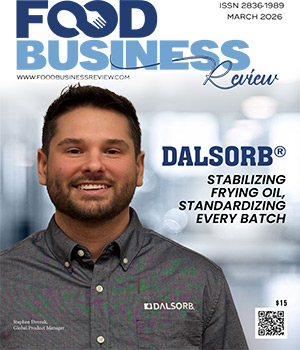
In high-volume frying operations, oil performance directly determines product consistency, operating cost and production stability. When oil quality fluctuates, cook times drift, color becomes uneven, flavors degrade, and teams are forced into reactive decisions that disrupt schedules and increase waste. Maintaining consistent oil chemistry at scale has long been one of the most persistent operational challenges for food processors. DALSORB® addresses this challenge by treating frying oil not as a consumable that eventually fails, but as a managed system that can be stabilized, measured and controlled over time. Rather than relying solely on mechanical filtration to remove particles, DALSORB® targets the dissolved degradation compounds that drive oil breakdown, including oxidation byproducts, free fatty acids and polar compounds. By removing these soluble contaminants during filtration, oil chemistry remains stable for longer, preserving frying performance across shifts and production cycles. The impact of this system-level approach is operational consistency. With oil maintained within defined performance ranges, processors experience more predictable heat transfer, uniform cook times, stable color and repeatable flavor profiles. Fewer emergency oil changeouts, less downtime, and reduced variability allow teams to operate with greater control, even in high-throughput environments. This shift from reactive oil replacement to proactive oil management forms the foundation of DALSORB®’s value to food processors. Extending Oil Life and Improving Efficiency In a busy kitchen or production facility, consistent oil quality means every batch of food cooks evenly, shift after shift. Cooking times stay on track, product appearance remains uniform, and flavor profiles are preserved. When oil begins to degrade, these fundamentals quickly erode, leading to longer cook times, uneven color and compromised taste. DALSORB® helps prevent this decline by maintaining oil condition as a controlled input to the frying process rather than an unpredictable variable.
Top Plant Based Ingredients Supplier 2026
As the demand for protein continues to accelerate across the U.S. market, one reality has become clear: it doesn’t matter whether the source is plant-based or animal-based—consumers want more protein. Protein inclusion is now visible across virtually every category, from beverages and snacks to dairy-free alternatives and hybrid meat products. Within this broader protein movement, one crop is emerging as a critical component in the future of food: fava bean. Its ability to improve amino acid profiles in hybrid meat and dairy products makes fava beans an invaluable asset for producers seeking to create more balanced and nutritious options. Importantly, the conversation is shifting from “plant-based protein” to added protein — and from “plant-based dairy” to dairy-free products that deliver comparable protein performance. For U.S. consumers, the benefit is what matters: higher protein content, improved nutrition, better texture, and clean taste. Meelunie, a seasoned supplier of plant-based ingredients, supports this shift by providing manufacturers with consistent access to high-functionality ingredients and dependable supply execution. “With its neutral taste and high versatility, fava bean protein isolate is being integrated into everything from meat substitutes to dairy alternatives and sports nutrition,” says Jan van Vilsteren, Vice President. Expanding Protein Inclusion Across Categories As protein fortification becomes mainstream, fava protein is increasingly being selected not simply because it is plant-based, but because it performs. Its ability to enhance amino acid balance in hybrid meat and dairy-free products makes it particularly valuable in applications where nutritional improvement is the priority. In blended meat systems, fava protein supports stronger protein claims while maintaining desirable texture and moisture retention. In dairy-free yogurts and beverages, it allows manufacturers to increase protein content while p.

Commercial Kitchen Equipment Repair Services

Successful culinary workspaces are harvesting the fruit of seamless equipment operations— Thanks to Santos Technical Services for ensuring all of their chef’s gears fire up without fail. An authorized and certified service provider for leading foodservice equipment brands, the company has become the hot ticket in the world of eateries for upholding proactive equipment care over reactive repairs. Its quick response time and competitive pricing have gained the trust of various establishments, including fast-food chains, restaurants and coffee shops. The kitchen might be the heart of the restaurant, but nothing disturbs service faster than a broken appliance. Santos Technical Services’ expert maintenance and repairs mean no delays or disruptions—just seamless operations all day long. From the morning rush to the last call of the night, service progresses as planned, and the kitchen never skips a beat. “Our customer-centricity helps build strong partnership with our clients, allowing them to benefit from exceptional service that keeps their kitchen equipment running in optimal condition,” says Reginaldo Santos, president. “We are a response to the industry’s demand for skilled professionals who can diagnose and sew up high-tech appliances.” In the foodservice industry, a malfunctioning diary dispenser or an outdated system can lead to costly downtime and inflate energy bills. The company helps clients avoid unexpected breakdowns and increased operational costs through repair services, scheduled maintenance programs and advanced diagnostics. From fast-cooking ovens and toasters to espresso machines, refrigeration units and water filtration systems, its team repairs every piece of equipment without a hitch. The company is a proud Commercial Food Equipment Service Association (CFESA) member and an authorized service provider for a range of highly distinguished brands, including BUNN, TurboChef, ACP Inc., Pentair and Manitowoc. Santos Technical Services’ certifications with Schaerer, Eversys and Carter-Hoffmann demonstrate its unwavering commitment to delivering high-quality service while preserving the integrity of the equipment’s warranty. Dedicated associates swiftly respond to service calls and gather necessary equipment information, including its type, nature of service and location. Technicians are then notified to resolve the issue and conduct follow-ups to confirm that no additional problems are anticipated. By tracking repair history and usage patterns and leveraging company vans equipped with essential parts of major brands, they ensure that most challenges are solved right off the bat.
CXO INSIGHTS

A Strategic Approach to Product Marketing
Jessica Blondeel, Director of Communications and Digital Marketing, Puratos

Why Food Safety and Quality Matter: A Crucial Element for Successful Food Service Businesses
Tracey McClure, CP-FS/PCQI, Sr. Manager, Food Safety and Quality Assurance, Jason’s Deli

The Value of Strategic Sourcing in Hospitality and Foodservice
Raphael Rique, Associate Director Sourcing, Foodbuy USA

Raising the Bar on Food Safety
Karen Singley, Director Food Safety and Technical Services, Jack in the Box

Elevating Hospitality Through Innovation and Planning
Jonathan Caretsky, Director of Operations, Levy Restaurants


IN FOCUS

Innovative Oil Management: Balancing Quality and Cost in Commercial Kitchens
Professional oil purification management enables safe kitchen operations through its chemical stability improvements while delivering substantial cost reductions through eco-friendly resource utilization.

Plant-Based Perfection: Meeting Consumer Demands Through Sensory Quality
Food brands prioritize plant-based suppliers who deliver appealing texture, authentic taste, and transparent, sustainable practices to build consumer trust.
EDITORIAL
Engineering Consistency Across The Food Value Chain
Food manufacturing is entering a more disciplined era, where operational control, ingredient performance and supply chain alignment determine both margin protection and brand integrity. This edition of Food Business Review examines how companies are strengthening core production inputs, from frying oil management to protein formulation, while reinforcing food safety and sourcing strategy across the value chain.
Recognized as Frying Oil Purification Management Company of the Year 2026, DALSORB® reframes oil as a managed system rather than a consumable input. By targeting dissolved degradation compounds that mechanical filtration cannot capture, its structured purification program stabilizes oil chemistry, extends oil life by up to 60 percent and supports reported oil discard reductions of up to 90 percent when integrated with disciplined protocols. The result is predictable cook times, uniform color, fewer emergency changeouts and measurable cost and sustainability gains rooted in process control.
As Top Plant Based Ingredients Supplier 2026, Meelunie advances protein inclusion through functional performance. Its fava protein isolate enhances amino acid balance in hybrid meat systems and supports protein parity in dairy-free applications, enabling higher protein claims without compromising texture or taste. Backed by a filtration process developed in Denmark, multi-source sourcing and ten North American warehouses, Meelunie combines formulation flexibility with execution reliability at scale.
Karen Singley, Director Food Safety and Technical Services at Jack in the Box, reinforces that “the first lens is always food safety,” emphasizing supplier evaluation, clear specifications and data-driven monitoring to ensure consistent commercialization and compliance. Complementing this, Raphael Rique, Associate Director Sourcing at Foodbuy USA, positions strategic sourcing as a coordination discipline grounded in total cost of ownership, risk diversification and stakeholder alignment.
Together, these perspectives highlight that operational rigor, measurable performance and disciplined collaboration define competitive advantage. We invite you to explore this issue and share your thoughts as the industry continues to raise its standards.
