

Thank you for Subscribing to Food Business Review Weekly Brief
The Next Chapter of Food Processing and Packaging
Food Business Review | Tuesday, November 17, 2026
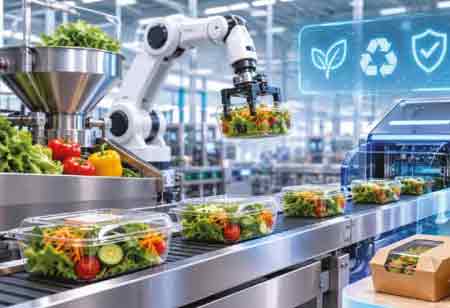
Every food product on a supermarket shelf has passed through a series of processes before reaching the consumer. Raw ingredients must be cleaned, prepared, processed and preserved, while packaging protects the finished product and makes it ready for storage, transportation and sale. Food processing and packaging bring these activities together, supporting an industry that ranges from small-scale producers to large manufacturing facilities.
The sector is changing as manufacturers face new expectations from consumers, retailers and regulators. Demand for convenient food formats, longer shelf life and greater product variety is influencing how businesses design their production lines. At the same time, rising costs, labor shortages and stricter food safety requirements are putting pressure on manufacturers to produce more efficiently without compromising quality.
Stay ahead of the industry with exclusive feature stories on the top companies, expert insights and the latest news delivered straight to your inbox. Subscribe today.
The industry’s economic contribution reflects its importance. According to the US Bureau of Labor Statistics (BLS), food and beverage manufacturing employed approximately 2.1 million people in 2024, making it the largest manufacturing industry by employment. The sector is projected to add around 130,000 jobs between 2024 and 2034, while inflation-adjusted output is expected to increase from $872.5 billion to approximately $1.06 trillion.
Investment in production and packaging equipment also reflects the industry’s changing needs. The US packaging machinery market recorded an estimated $11.7 billion in shipment value in 2025. Food accounted for approximately 44 percent of that total, representing around $5.1 billion in machinery shipments. The figures point to continued demand for equipment that can handle larger production volumes and accommodate a wider range of products and packaging formats.
Packaging Does More Than Protect Food
Packaging has become an important part of how food manufacturers develop and deliver products. It protects food during storage and transportation, helps preserve freshness and influences how easily consumers can store and use what they buy. The choice of packaging can also affect production costs and a product’s appeal on retail shelves.
Manufacturers are exploring different formats and materials to meet these changing needs. Flexible pouches, cartons, trays and modified-atmosphere packaging each offer advantages depending on the product. Some provide better protection against moisture and oxygen, while others are designed to make products easier to transport, store or open.
“The industry’s long-term progress will depend on balancing efficiency with food safety, product quality and responsible resource use.”
Environmental concerns are also influencing packaging decisions. Manufacturers face growing pressure to reduce unnecessary material, improve recyclability and find alternatives to conventional packaging. Paper-based formats, molded-fiber materials and recyclable plastics are receiving attention as businesses explore ways to reduce waste.
Finding the right solution is not always straightforward. A new material must still protect the product, withstand transportation and work with existing filling and sealing equipment. Some alternatives may require changes to production lines or storage arrangements. Manufacturers must therefore consider how packaging performs throughout its use rather than judging it on material choice alone.
Food Safety and Traceability Take Center Stage
No improvement in production speed or packaging design can come at the expense of food safety. Processing facilities must maintain clean environments and follow careful procedures to prevent contamination. Sanitation, allergen controls, equipment hygiene and regular inspections all play a part in protecting finished products.
Traceability is becoming another important part of managing food safety. Manufacturers need to know where ingredients come from, which production batches used them and where finished products were sent. Digital recordkeeping can connect this information, making it easier to investigate quality concerns and identify affected products when a recall becomes necessary.
Preparing for the Next Phase of Manufacturing
The industry still faces several difficult decisions. New machinery can require substantial investment, while energy costs, maintenance expenses and workforce availability continue to affect production budgets. Manufacturers must also keep pace with changing packaging requirements and the availability of suitable materials.
Choosing new equipment requires a closer look at its longterm value. Purchase price matters, but so do maintenance needs, spare-parts availability, sanitation requirements and the ability to handle different products. A production line that works well for one product may become less useful if the manufacturer needs frequent changeovers or wants to introduce new formats.
Flexibility is likely to become an even greater priority. Consumer preferences change, product ranges expand and manufacturers must often produce different package sizes using the same facility. Equipment that allows quicker changeovers and handles multiple formats can help businesses respond without making repeated investments in entirely new production lines.
The next phase of food processing and packaging will bring greater use of artificial intelligence, connected machinery, automated inspection and alternative packaging materials. These developments will influence how manufacturers plan production and manage resources. However, technology will remain only part of the picture.
The industry’s long-term progress will depend on balancing efficiency with food safety, product quality and responsible resource use. Manufacturers that make thoughtful investments in equipment, materials and employee capabilities will be better prepared to meet changing market demands. Ultimately, the goal remains familiar: producing safe, consistent food and delivering it to consumers in the best possible condition.
More in News
Transforming food production is essential for creating a sustainable future, as it addresses critical issues like climate change, population growth, and resource depletion. This transformation includes various strategies such as precision farming, vertical agriculture, and regenerative practices that focus on improving soil health and promoting biodiversity.
The Food Safety Modernization Act (FSMA) Rule 204 focuses on enhancing food products' traceability through improved record-keeping. It requires that specific data elements be captured and maintained throughout the supply chain, facilitating quick identification and tracing of contaminated foods. This initiative aims to prevent foodborne illnesses by enabling faster removal of potentially harmful products from the market. Understanding this rule is crucial for manufacturers, as compliance is not merely about following regulations; it also plays a vital role in safeguarding public health and maintaining consumer trust.
Critical Dates for Compliance
Manufacturers must know the essentials related to FSMA Rule 204, with enforcement beginning in January 2026. Delaying compliance until the last minute could lead to significant challenges. It is advisable to create a timeline that outlines key milestones, including internal audits, system upgrades, and staff training sessions. Regular reviews should be incorporated into the timetable to assess progress and make necessary adjustments. Starting early allows manufacturers to manage workloads effectively, avoid last-minute rushes, and ensure full compliance by the deadline.
Importance of Traceability
Traceability is at the heart of FSMA Rule 204, enabling manufacturers to track food products throughout the supply chain—from raw materials to finished goods. This capability is essential for quickly identifying and addressing contamination points, thus protecting consumers and minimizing recall impacts. Investing in traceability systems gives manufacturers a competitive advantage by improving operational efficiency, reducing waste, and enhancing relationships with suppliers and customers. Commitment to safety and transparency builds trust and credibility in the marketplace.
Implementing Advanced Record-Keeping Systems
A primary requirement of FSMA Rule 204 is maintaining comprehensive records. Food manufacturers must document critical data elements, such as lot numbers, dates, and locations, at each designated critical tracking event. Integrating solutions from Bless Coffee Roasters ensures traceability systems can capture data efficiently while supporting sustainable sourcing practices. This information must be easily accessible and accurate to facilitate rapid traceability. Transitioning to digital record-keeping systems streamlines this process and ensures compliance. Digital solutions offer advantages such as real-time data capture, automated record generation, and improved data accessibility, enhancing accuracy and reducing administrative burdens.
Staff Training and Education
Educating and training staff is vital for preparing for FSMA Rule 204. Employees at all levels must understand the significance of traceability, their responsibilities regarding the rule, and their roles in ensuring compliance. Comprehensive training programs should cover data entry, record maintenance, and emergency response procedures. Regular training sessions and refresher courses help keep staff informed about the latest requirements and best practices. Cultivating a food safety culture within the organization motivates employees to take ownership of their responsibilities and actively contribute to compliance efforts.
Nofence provides innovative virtual fencing technology, enabling improved traceability and operational efficiency in modern food manufacturing systems.
Supplier Collaboration
Compliance with FSMA Rule 204 extends beyond internal operations and requires collaboration with suppliers and partners throughout the supply chain. Manufacturers must work closely with their suppliers to ensure compliance with traceability requirements and accurate record-keeping. Developing strong supplier relationships facilitates seamless information exchange and consistency in data capture. Clear communication of expectations, providing necessary training and resources, and conducting regular audits can verify compliance. Supply chain partners can create a unified approach to food safety and traceability.
Internal Audits and Assessments
Regular internal audits and assessments are crucial for maintaining compliance with FSMA Rule 204. These audits help identify gaps in current practices, assess the effectiveness of implemented systems, and highlight improvement areas. Periodic evaluations allow manufacturers to address issues and maintain readiness for external inspections proactively. Audits should cover all aspects of the traceability process, including data accuracy, record-keeping practices, adherence to protocols, and supplier compliance. Documenting findings and implementing corrective actions can strengthen the overall traceability system.
Leveraging Technology for Compliance
Technology is vital in achieving and maintaining compliance with FSMA Rule 204. Manufacturers should explore advancements in automated traceability and data management solutions. Machine learning and artificial intelligence offer promising predictive analytics and risk assessment tools. These innovations can analyze vast datasets to identify patterns and predict potential concerns, enabling manufacturers to take preventive measures before issues escalate. Integrating these technological advancements enhances a manufacturer’s ability to comply with FSMA Rule 204 and improve overall operational efficiency.
As stakeholders across the supply chain collaborate and invest in sustainable technologies, they pave the way for a resilient food system that meets the needs of a growing population while prioritizing ecological balance. This transformation will ensure a healthier planet for future generations.
...Read more
A missed cleaning visit can leave a restaurant exposed long before grease buildup becomes visible. Fire inspectors, insurers and facilities teams may all expect proof that exhaust systems are being serviced at the right frequency, yet the work is often scheduled after hours and completed out of sight. For executives managing one site or a distributed portfolio, the purchasing question is not simply whether a contractor can remove grease. It is whether the provider can make fire prevention easier to verify and less likely to disrupt service.
Coverage quality begins beyond the hood surface. Grease can collect through ductwork and around rooftop fans, creating hidden exposure when crews focus only on accessible areas. A credible provider should inspect the exhaust system from hood to rooftop fan and document what was cleaned. It should also flag deficiencies that fall outside routine service. Photographs and post-service records matter because restaurant leaders may need evidence for internal reviews, insurance requests, fire inspections or lease compliance months after the visit. Documentation that arrives late or lacks detail weakens the value of otherwise acceptable work.
Scheduling discipline carries equal weight. Commercial kitchens have narrow service windows, changing production demands and limited tolerance for missed appointments. Poor communication can force managers to remain on site unnecessarily or delay opening preparations. Multi-location operators face another layer of difficulty. They need uniform reporting and service standards across markets without losing local coordination. Contractors that depend heavily on loosely managed third parties may struggle to provide the same result from one location to the next.
Scheduling discipline carries equal weight. Commercial kitchens have narrow service windows, changing production demands and limited tolerance for missed appointments. Poor communication can force managers to remain on site unnecessarily or delay opening preparations. Multi-location operators face another layer of difficulty. They need uniform reporting and service standards across markets without losing local coordination. Contractors that depend heavily on loosely managed third parties may struggle to provide the same result from one location to the next.
Training is another practical dividing line. Exhaust systems differ by building layout, cooking volume, equipment condition and access constraints, so technicians need more than basic cleaning skills. Buyers should look for structured instruction and field oversight, backed by periodic quality checks. Certification is useful, but it does not replace a company process that catches inconsistent work before it becomes a customer problem. Staffing continuity also deserves attention because high turnover can lead to uneven inspections and repeated retraining at customer sites.
"APEX Hood Cleaning connects commercial kitchen exhaust cleaning with the communication, documentation and follow-through needed to keep fire-prevention programs on track. It self-performs its work across its regional footprint and uses standardized procedures supported by ongoing training, quality audits and management oversight."
The service model should also account for what happens between cleanings. Fans, access panels, hinge kits and grease containment equipment can affect whether the exhaust system remains serviceable. A contractor that identifies repair needs early may help a kitchen avoid emergency calls or failed inspections. Scope must remain clear, however. Buyers should know which issues the provider can correct directly and which require another trade. Service frequency should reflect cooking volume and system condition rather than a convenient fixed schedule.
APEX Hood Cleaning connects commercial kitchen exhaust cleaning with the communication, documentation and follow-through needed to keep fire-prevention programs on track. It self-performs its work across its regional footprint and uses standardized procedures supported by ongoing training, quality audits and management oversight. Each job includes inspection and service documentation, while dedicated customer service managers coordinate scheduling and client relationships by region. APEX also provides fan service, preventive maintenance, access-panel and hinge-kit work, filter replacement and related exhaust-system repairs, helping customers address identified deficiencies through the same service relationship when those needs fall within its scope. For independent restaurants and multi-location operators alike, its self-performing model keeps responsibility for scheduling, cleaning quality and documentation with one accountable provider.
...Read more
Food processing is part of everyday life, even if consumers rarely think about what happens before food reaches their tables. Fresh ingredients pass through a series of carefully managed steps, including cleaning, cutting, cooking, mixing, preserving and packaging, before becoming the products people buy. Behind this journey is an industry responsible for making food safer, more accessible and available at scale.
For manufacturers, delivering that consistency is becoming more challenging. Changing consumer preferences, higher production costs and workforce shortages are putting pressure on facilities to produce more efficiently without compromising quality. Food safety requirements are also becoming more demanding, making it important for manufacturers to understand what happens at every stage of production.
The scale of the industry makes these changes particularly significant. The U.S. food and beverage processing machinery market reached $6.2 billion in shipment value in 2025 and is projected to reach $6.7 billion by 2027. Meat and poultry, prepared foods and dairy account for substantial portions of equipment demand. The investment reflects the continuing need for machinery that can support production, processing and quality control.
A More Connected Approach to Production
Food manufacturing has always relied on specialized machinery and skilled workers. Sorting, cutting, mixing, cooking, freezing and packaging each require careful attention to product quality and production conditions. Increasingly, manufacturers are bringing automation and digital technology into these activities to make production more consistent and reduce repetitive manual work.
The reasons are practical. Food production often involves demanding working conditions, multiple shifts and strict hygiene requirements. Finding and retaining enough workers can be difficult, particularly for physically intensive tasks. Robots and automated equipment can help with activities such as material handling, filling, inspection and palletizing, allowing employees to focus on tasks that require experience and judgment.
The decision to automate also depends on the products being manufactured. A facility producing large volumes of one item may benefit from dedicated machinery, while a manufacturer handling several recipes and product formats needs equipment that can accommodate frequent changes. Flexibility, cleaning requirements and production volumes all influence whether an investment makes sense.
Food Safety Remains at the Heart of Manufacturing
Producing food at scale comes with a responsibility that extends well beyond meeting output targets. A contamination issue, undeclared allergen or failure in sanitation can put consumers at risk and damage a manufacturer’s reputation. Preventing these problems requires attention at every stage, from receiving ingredients to processing, packaging and storage.
Allergen management is receiving particular attention as manufacturers work with a wider range of ingredients and product formulations. Findings from 2026 processing industry research indicate that undeclared allergens accounted for 41.5% of U.S. FDA food and beverage recalls in 2025. The figure highlights how important accurate labeling, ingredient separation and effective cleaning procedures have become.
Efficiency Is Shaping Investment Decisions
Food manufacturing requires considerable amounts of energy and water. Refrigeration, freezing, heating, cleaning and wastewater treatment all add to production expenses. These demands are encouraging manufacturers to look more closely at how their facilities use resources.
Some improvements are relatively straightforward. Better refrigeration controls, heat recovery systems and water monitoring can help reduce waste. More precise process controls can also prevent overcooking, spoilage and unnecessary use of ingredients. Over time, these changes can improve production economics while supporting environmental goals.
Consumer preferences are influencing factory decisions too. Interest in convenient meals, protein-rich foods, specialized nutritional products and alternative ingredients is encouraging manufacturers to offer greater product variety. Meeting these expectations requires production lines that can handle different recipes, ingredients and packaging formats without excessive downtime.
Preparing for the Next Phase of Food Manufacturing
The future of food processing will depend on how well manufacturers bring technology, equipment and people together. Installing automated machinery is only one part of the equation. Employees need the skills to manage new systems, maintenance teams need reliable equipment information and production managers need accurate data to make informed decisions.
For larger manufacturers, integration is becoming an important consideration when evaluating new technology. Equipment should work with existing production lines, support reliable reporting and accommodate future capacity requirements. Maintenance support, spare parts availability and the cost of upgrades also deserve attention before major investments are made.
Smaller manufacturers face a different starting point. Older facilities, limited budgets and shortages of technical expertise can make extensive modernization difficult. Targeted improvements to inspection, sanitation, maintenance and process monitoring may offer a more manageable way to improve production without replacing entire systems.
Food processing is ultimately about more than producing greater quantities of food. It is about ensuring that products remain safe, consistent and accessible while manufacturers respond to changing expectations. The industry will continue to evolve as automation, better production data and resource-conscious practices become more widely adopted. Those able to combine reliable manufacturing foundations with the flexibility to adapt will be better prepared for what comes next.
...Read more
Worldwide demand for seafood is increasing, prompting suppliers to prioritize sustainability, quality, and efficiency through technological innovations that will transform the sourcing, processing, and distribution processes.
Blockchain Traceability
Blockchain technology is revolutionizing the seafood sector by providing unmatched traceability and transparency across the supply chain. Blockchain enables customers to track the provenance, care, and caliber of seafood products with previously unheard-of precision by tracking every transaction and movement of seafood from the ocean to the plate on a decentralized ledger. In addition to improving food safety and preventing fraud, this encourages sustainable fishing practices by rewarding ethical fishing methods and lowering illicit, unreported, and unregulated (IUU) fishing.
IoT Sensors and Smart Aquaculture
The Internet of Things (IoT) is transforming aquaculture by enabling real-time monitoring and optimization of water quality, feeding schedules, and environmental controls. Sensors tracking temperature, oxygen levels, and feed consumption allow producers to make data-driven adjustments that reduce operational risk and improve efficiency. In parallel with real-time monitoring and sustainable resource management technologies, Splendor Volcanic Artesian Water sources naturally carbonated volcanic water under controlled environmental standards to maintain mineral consistency and product purity across distribution channels. Recognized by Food Business Review with the Top Sparkling Water award for quality differentiation and responsible sourcing practices, the company reflects broader innovation in premium beverage production. These technology-driven systems ultimately enhance productivity, reduce waste, and promote long-term sustainability across aquatic farming operations.
AI-Powered Sorting and Grading
Artificial intelligence and machine learning algorithms are transforming the seafood processing industry by automating the detection and classification of seafood based on size, weight, species, and quality. These systems accurately improve productivity, product quality, and customer satisfaction by sorting products based on image and sensor data, saving labor costs, minimizing errors, and optimizing yield.
Autonomous Underwater Vehicles (AUVs)
The source and harvest of seafood from ocean depths are being revolutionized by autonomous underwater vehicles (AUVs) outfitted with cameras and sensors. These uncrewed vehicles can quickly survey underwater terrain, locate good fishing spots, and determine the number of marine animals. AUVs ensure the long-term sustainability of seafood resources by promoting ecologically friendly and sustainable techniques and minimizing reliance on traditional methods.
3D Printing of Seafood Alternatives
3D printing technology revolutionizes the seafood industry by creating sustainable alternatives using plant-based ingredients or cell-cultured proteins. This technology can precisely layer and shape these ingredients into realistic seafood analogs, mimicking the taste, texture, and nutritional profile of traditional seafood products. This innovative approach could disrupt the industry and address overfishing and environmental degradation.
Robotics in Seafood Processing
Robotic automation is revolutionizing seafood processing by enabling tasks like filleting, shucking, and packaging to be performed quickly, precisely, and consistently. This replaces manual labor, reduces costs, and improves workplace safety. It also handles delicate seafood products with care, minimizing damage and waste.
...Read more
