
Thank you for Subscribing to Food Business Review Weekly Brief
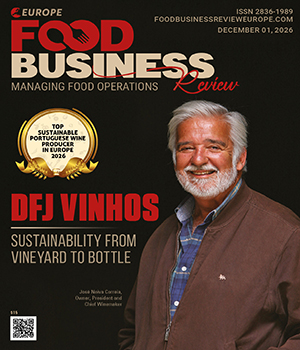
With 99.8 per cent of its production exported to more than 50 destinations, DFJ Vinhos has built its business around understanding what wine buyers need in different markets. The Portuguese producer works closely with importers to develop wines that suit local tastes and target prices, from assessing competing products to refining blends and packaging. Sometimes the answer is an existing wine. In other cases, it means creating a tailored offering, with proposals prepared in just a few days. Founded in 1998, the family-owned company pairs this market-led approach with a commitment to sustainability. Its 250 hectares of certified vineyards are cultivated without irrigation, while soil analysis, wastewater testing and resource-conscious production practices inform decisions across its operations. For DFJ Vinhos, responsible resource use and commercial viability go hand in hand. “If a business is not sustainable, it is not a business, it is a problem,” says José Neiva Correia, owner, president and chief winemaker.
Canned Food and Beverages
As food corporations expand globally, decision-making often becomes more centralized, creating a natural distance from the fields where crops are cultivated. This distance can make it harder to maintain direct connections with the growers who sustain the land, and with them, the on-the-ground insight essential to long-term stewardship. Bridging this gap through closer collaboration with local communities and those who directly tend the crops can align operational efficiency with enduring social and environmental responsibility. Knouse Foods puts this philosophy into practice, reinstating ownership and stewardship with those who have the most intimate knowledge of the orchards. A leader in the production of branded and private-label fruit products, the company operates as a grower-owned cooperative representing more than 100 family farms across the Appalachian Valley. The livelihoods of these farmers’ depend on the long-term health of their land, creating a level of care and commitment that industrial suppliers struggle to match. “Our ownership model shapes everything we do from how the fruit is grown to how it reaches kitchens nationwide,” says Todd H. Michael, senior director of sales, food service division. “The direct connection provides our partners with consistent quality and a reliable supply of ingredients year after year.” That dedication is reflected in the company’s broad product lineup, delivering high-quality fruit products to consumers across the country. It includes applesauce, sliced apples, juice, cider, apple butter, and fruit fillings or toppings, all produced under the trusted Musselman’s and Lucky Leaf brands. The products align with modern menu expectations, offering clean-label options free from synthetic colors, artificial preservatives, high fructose corn syrup or genetically engineered ingredients. The clean-label approach is more than just a selling point. It’s a philosophy that threads through every product and partnership. This commitment supports a diverse range of foodservice needs, from schools and healthcare facilities to restaurants.

Food Processing and Packaging

Sustainability is a shared priority for both food brands and consumers, but the path forward for packaging isn’t always simple. Companies face increasing pressure to reduce polymer products, minimize waste and adopt greener materials, yet packaging remains the first line of defense, protecting food from oxygen, moisture and contaminants that impact safety and product integrity. The challenge lies in materials. High-performance solutions like multilayer laminates and foil-based films offer strong protection but are hard to recycle or compost. More sustainable options, such as mono-materials or compostable films, often fall short of cost requirements. It’s why even McKinsey reports suggest 60 to 70 percent of U.S. consumers still rank food safety above environmental impact when evaluating packaging. Sunshine FPC is helping brands move past this either-or mindset. It addresses the packaging design challenge head-on, guiding manufacturers toward sustainable materials without compromising on what keeps food safe, fresh and compliant. Its Modified Atmosphere Packaging (MAP) capabilities reflect this balance in practice. By precisely engineering oxygen and moisture transmission properties, Sunshine’s MAP structures extend shelf life by up to 35 percent. The result: reduced food spoilage, preserved product quality and improved efficiency across the supply chain, all while supporting ESG commitments. “We don’t treat sustainability as a bolt-on feature. It has to be engineered into the structure, alongside performance and safety, so brands aren’t forced to compromise,” says James Chuang, President and CEO of Sunshine FPC. Its compostable PLA and PHA films undergo identical rigorous testing as traditional materials, ensuring they support the protective requirements of MAP. Post-consumer recycled (PCR) content gets engineered to match sealing integrity as virgin resin, an essential factor in shelf-life preservation. This is backed by a robust quality system where Sunshine’s materials and processes align with FSMA, Prop 65, and BRC standards, all under an internal Quality Management System (QMS) embraced company-wide. This allows brands to lead on sustainability without risking operational performance or consumer experience.
Beer and Wine

Reflections on Wine Skills and Knowledge Training In Hospitality Today
Louise Gordon, Head of Wine Education, Hand Picked Hotels
Food Sustainability

Sustainability Leadership and the Path to Meaningful Impact
Sibeal Bird, European Sustainability Director, Kerry
Beer and Wine

Building a Strong EHS Culture through Leadership
Jason Ayling, GSP | Senior Manager, Environmental, Health & Safety, INW – Dallas One Solutions
Beer and Wine

The Hidden Cost of Poor Supply Chain Visibility in Fast Casual Restaurants
Jose Raul Guerra, Director of Supply Chain and Pricing Strategy, Mezeh
Beer and Wine

Innovating With Purpose and Consumer Insight
Hilary Butler, Vice President Marketing, Mcbride Sisters Wine Company

IN MY OPINION
Beer and Wine
Egg Safety in a Time of Bird Flu: What the Food Business Needs to Know
Oscar Garrison, SVP, Food Safety and Regulatory Affairs, United Egg Producers

LAST WORD
Beer and Wine
The Formula for Lasting Customer Loyalty
April Kinloch-Hackstall, MBA, North America Head of Digital Marketing, Nando’s Restaurant Group, Inc.
IN FOCUS

Sustainable Wine Producers in Europe: Balancing Heritage and Growth
Sustainable Portuguese wine producers strengthen brand reputation, support long-term production value and improve resource efficiency.

The Next Chapter of Food Processing and Packaging
Every food product on a supermarket shelf has passed through a series of processes before reaching the consumer.
EDITORIAL
Sustainability and Customercentricity in Food and Beverage
Food and beverage businesses across Europe must make decisions that affect how they produce, serve, and compete. Sustainable sourcing and production, consistent product quality, skilled employees, and stronger customer relationships all influence how companies build their market position. The latest edition of Food Business Review Europe examines how businesses and industry leaders are responding to these priorities through responsible production, market-led innovation, professional development, and customer engagement.
The Cover Story features DFJ Vinhos, recognized as the Top Sustainable Portuguese Wine Producer in Europe 2026. The company cultivates 250 hectares of certified vineyards without irrigation, using soil analysis, targeted nutrient management, and wastewater testing to guide production. Solar energy, lightweight glass bottles, and recycled or recyclable materials extend its approach to resource efficiency. DFJ Vinhos exports 99.8 percent of its production to more than 50 destinations. Its flexible business model also allows it to develop wines around local consumer preferences, importer requirements, and target prices. With more than 6,908 awards since 2010, the company has built an extensive record of international recognition. Under the leadership of owner, president, and chief winemaker José Neiva Correia, DFJ Vinhos demonstrates how environmental responsibility can inform production and commercial strategy.
The edition also examines the people and relationships behind successful hospitality businesses. Louise Gordon, Head of Wine at Hand Picked Hotels, explains how practical wine training helps hospitality teams develop service skills and confidence. Her perspective emphasizes a working knowledge of wine, interactive learning, and consistent service. April Kinloch-Hackstall, MBA, North America Head of Digital Marketing at Nando’s Restaurant Group, Inc., explores how brands build lasting customer loyalty. She discusses brand clarity, collaboration between marketing and customer experience teams, personalized loyalty programs, responsible data management, and the importance of retaining human consideration as technology advances.
Together, these stories examine how food and beverage businesses translate sustainability, employee development, and customer understanding into business practice. Explore the latest edition to discover the companies and leaders shaping the industry’s next phase.
