

Thank you for Subscribing to Food Business Review Weekly Brief
![AGI [TSE:AFN]: Connecting Storage and Handling Across the Food Supply Chain](https://www.foodbusinessrevieweurope.com/newstransfer/upload/17-hppvx.jpg "AGI [TSE:AFN]: Connecting Storage and Handling Across the Food Supply Chain")
Bulk food and agricultural commodities depend on a chain of decisions before they reach the next stage of use. Grain, seed, feed, fertilizer and food ingredients must be stored in conditions that preserve value, then transferred efficiently through equipment that keeps operations moving. Storage and handling cannot be treated as separate concerns. One protects the commodity; the other determines how reliably it flows. AGI [TSE:AFN] operates in this realm. The company is a global food infrastructure provider serving farmers, processors and commercial customers with equipment and engineering solutions for producing, protecting and delivering grain, fertilizer, seed, feed and food supplies. Its relevance is strongest in the way its storage, portable handling and permanent handling offerings work together to manage bulk commodity movement. The story begins with storage, but it does not stop there. A bin, tank or temporary storage system only creates value when material can be loaded, conditioned, unloaded and transferred with minimal friction. AGI’s product architecture reflects that practical reality, linking storage infrastructure with equipment that moves commodities into, through and out of the system. Protecting Commodity Value Before Movement Begins Storage is the first point where food and agricultural commodities are preserved for future movement. AGI’s storage portfolio includes grain bins, bolted bins, hopper bins, smoothwall bins, temporary storage, unloads and sweeps, accessories and related conditioning products. These solutions are designed to protect and preserve the quality of grain and fertilizer throughout the storage process. That protection requires more than containment. Grain storage often involves air movement, unloading control and conditioning elements that influence how material is kept until it is ready to move. AGI’s storage category includes mixed flow dryers, fans and heaters, aeration, aeration floors, vents and exhausters and stirring systems. These components matter because storage is an active part of the commodity chain, not a pause in it.
![AGI [TSE:AFN]: Connecting Storage and Handling Across the Food Supply Chain](https://www.foodbusinessrevieweurope.com/newstransfer/upload/20-ukvov-.jpg "AGI [TSE:AFN]: Connecting Storage and Handling Across the Food Supply Chain")
Top Food Product Distributor In Canada 2026
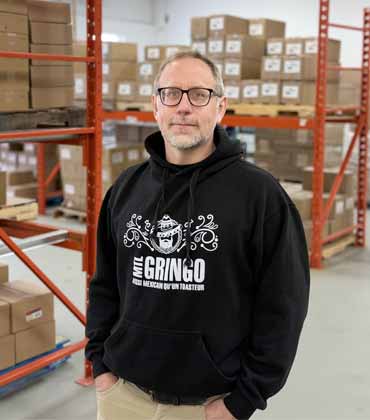
Long before Aliment Snack became a growing name in distribution, Maurice Pelletier, its director, was doing something far more familiar and difficult: running a small food retail shop in Montreal. It was the kind of business where every decision mattered. What to stock, how much to order and when to reorder carried real financial weight. In that process, one issue kept surfacing: the system wasn’t built for businesses like his. Suppliers were plentiful, but workable partnerships were not. Large distributors operated with precision, but their models favored volume. Minimum orders were high, product access was rigid, and delivery timelines didn’t always align with the realities of a small store. For an independent owner, that meant overbuying, overstocking, and often overpaying to keep shelves from going empty. How did Maurice Pelletier identify structural gaps affecting independent retailers and distributors? The friction became impossible to ignore when Pelletier launched MTL Gringo, his own brand of salsa and tortilla chips, in 2018. Trying to get it into stores exposed the same structural gap from a different angle. Small retailers needed efficiency but also variety and flexibility. Distributors offered efficiency but rarely on a scale that was feasible for the retailers. The two sides weren’t misaligned by intent, but by design. So, he changed the design. Instead of searching for a distributor that understood small businesses, he became one. What started as self-distribution (loading up his own products and delivering them across Quebec), quickly evolved into something larger. On each route, Pelletier began adding complementary items: candies, chips, preserves. The logic was simple but powerful. If small stores needed one reliable delivery, it might as well carry everything they struggled to source elsewhere..
Pure Chocolate Manufacturer
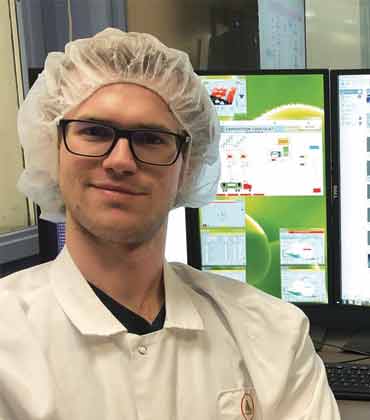
What looks like a simple chocolate chip in a cookie or a swirl in ice cream is, for food manufacturers, one of the most decisive factors in product success. Inclusions must survive the extremes of baking and freezing, run with less fat to meet consumer demand and deliver identical results batch after batch. But most chocolate manufacturers who supply these chocolate inclusions still rely on equipment that was never designed for this purpose. For instance, Bühler’s machines, the global gold standard, are optimized for traditional chocolate products, like bars, pralines, and molded pieces, where higher fat content is the norm. When those same systems are pushed into producing lowfat inclusions, the chocolate no longer holds its form. Nutriart changes the equation. By taking Bühler’s proven equipment as a foundation and re-engineering it with proprietary modifications, from moisture-reducing roasters to refiners with live quality sensors, it has created a process purpose-built for inclusions. The result is chocolate that runs leaner on fat without sacrificing efficiency, delivering the kind of industrial consistency that food manufacturers can count on, run after run. Stripping out excess moisture during roasting is the key. It produces a drier cocoa liquor that stays fluid with less fat, making low-fat inclusions not only possible but practical at scale. Paired with live monitoring of viscosity and particle size, Nutriart ensures every batch meets specification precisely, aligning chocolate with consumer demand for healthier recipes while giving manufacturers a true competitive edge. “We make an immediate difference when food manufacturers come to us after struggling with chocolate that burns, melts away or leaks during baking. Our inclusions perform exactly as they should, so fewer batches are rejected in quality control, and consumers experience the same dependable quality in every bite,” says Jean Phillipe Leclerc, CEO. Sustaining that advantage demands automation at the core. Chocolate quality ultimately depends on three critical variables; fat content, particle size and viscosity, which Nutriart calls the triangle of quality. While most plants measure these factors intermittently, Nutriart automates the process from start to finish. Infrared spectrometers keep fat precisely on target, laser sensors embedded in refiners monitor particle size continuously and a patent-pending system adjusts viscosity live during conching. The integrated control loop guarantees that every batch meets specifications exactly, delivering the operational consistency manufacturers rely on while protecting both cost efficiency and product performance.
Top Office Coffee Service in Canada 2026
What operational challenges arise when workplace coffee systems fail during early shifts? In many workplaces, the first employees arrive before sunrise. By 5:00 AM or 6:00 AM, production floors are active, offices are opening and early-shift teams expect the coffee machines to be ready and working. When they are not, the disruption is immediate. Managers are notified, technicians are dispatched and the day’s productivity stalls before it has fully begun. Office coffee service, in that sense, functions less like a perk and more like infrastructure. The quality of the blend and the equipment selection still matter, but long-term value is defined by the service consistency. Canada Coffee structures its service model around preventing such disruptions. Operating in Southern Ontario, the company focuses on keeping equipment operational, responding quickly and ensuring service interactions remain simple and consistent for clients. Patricia Almeida, Director of Growth and Administration, explains her company’s mission clearly. “We take the pressure off management and allow employees to start their day more peacefully.”

Top Cloud-Based Catering Platform In Canada

MonkeyMedia Software combines enterprise-grade catering-specific software with strategic support to help restaurant brands transform catering from a fragile side operation into a disciplined, scalable growth engine. It works on a clear premise: catering is not simply an extension of B2C takeout, it is a fundamentally unique standalone B2B business. While takeout focuses on speed and simplicity, catering demands advance scheduling, bulk production, cross-functional coordination and long-term customer management. Generalist takeout solutions, repurposed POS systems, and food marketplaces were never designed to support that reality at enterprise scale. “Restaurants leaned on spreadsheets and instinct for years, but catering needs structure,” says Ben Pidduck, CEO. “It behaves like a B2B business, not a walk-in transaction.” MONKEY treats catering as a high-value revenue stream for restaurants that deserves real process and clear workflows. The catering management platform centralizes ordering, client communication, kitchen production, delivery coordination and back-office reconciliation, helping restaurants gain the control and visibility required to maximize revenue. Founded over 20 years ago in the back of a deli kitchen, MONKEY pioneered catering technology – well before the recent wave of takeout driven tools entered the space – and continues to shape the forefront of catering technology. As former catering operators themselves, MONKEY has stayed true to its roots, working closely with partners to guide catering program development, smooth operations, and act as a thought partners as they grow. Unlike transaction-based platforms, MONKEY does not take a percentage of orders. With a flat monthly fee, MONKEY is fully aligned to drive its partners’ growth and profitability.
CXO INSIGHTS

Prioritizing The Customer Experience
Paul Tobias, District & Quality Assurance Manager, Osmow's Inc

Navigating Authenticity and Empathy in The Food Industry
Sasha Manoli, Marketing Director, Dana Hospitality

Integrating Innovation and Practicality for Sustainable Packaging Solutions
Julia Lodi, Procurement Specialist - Packaging, Nature’s Path

From Photography to Strategy: Designing Memorable Dining Experiences
Huy Tran, National Marketing Director, Aburi Restaurants Canada

Reaping What You Sow From Cloud Computing in a Variable Industry
Enrique Leon, AI Enterprise Architect, American Sugar Refining Inc.


IN FOCUS

Food Storage and Handling Solutions in Canada: Ensuring Supply Chain Reliability
Food storage solutions in Canada ensure safety, maintain quality, reduce waste, and enhance efficiency through controlled environments, automation, and resilient supply chain strategies.
Food Product Distribution Networks: Supply Chain Precision in Canada
Food product distributors in Canada manage complex supply chains, ensuring product quality, regulatory compliance, efficient logistics, and consistent availability across diverse markets.
EDITORIAL
Rethinking Food Infrastructure For Continuous Performance
Food systems are no longer evaluated solely by output, but also by how reliably they operate under pressure. In this edition of Food Business Review Canada, the focus turns to continuity as a defining metric, where storage, handling and service delivery must function as coordinated systems rather than isolated capabilities.
Our cover story, AGI, recognized as the Top Food Storage & Handling Solutions in Canada 2026, exemplifies this shift. Its strength lies in how its storage and handling systems are engineered to work together. By linking grain bins, conditioning systems, portable transfer equipment and permanent handling infrastructure, AGI enables a continuous flow of commodities across the supply chain. Storage becomes an active control point rather than a passive stage, while handling systems ensure movement remains predictable and efficient.
Canada Coffee, recognized as the Top Office Coffee Service in Canada 2026, applies a similar operational logic to workplace services. Its model centers on preventive maintenance, controlled geographic expansion and service continuity, ensuring equipment performs consistently in high-demand environments. Aliment Snack, recognized as the Top Food Product Distributor in Canada 2026, reflects the same focus on operational reliability. By offering low minimum orders, curated product selection and dependable distribution, the company helps small independent retailers manage inventory more flexibly while maintaining consistent day-to-day operations.
Leadership perspectives in this edition reinforce the same principle. Juan Gabriel Aguiriano Nalda, Group Head of Marketing and Sustainability at Kerry, underscores the importance of translating consumer insight into commercially relevant solutions through continuous feedback and adaptability. In parallel, Sebastien Abbatiello, Chief Marketing Officer at Pizza Salvatore, demonstrates how disciplined, authenticity-driven social media strategies can sustain engagement without relying on overt promotion.
Taken together, these developments point to a clear shift. Competitive advantage in the food industry is increasingly built on systems that perform consistently, adapt quickly and remain closely aligned with end-user expectations. The organizations featured in this issue reflect a broader shift toward operational precision as the foundation of growth. We invite you to explore the companies and leaders advancing more stable and responsive food operations.
