
Thank you for Subscribing to Food Business Review Weekly Brief

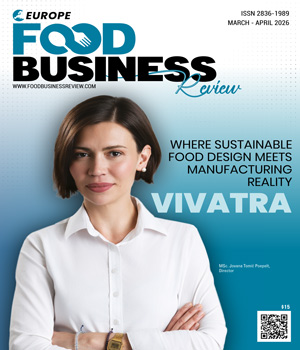
Food brands and manufacturers lose time and money when promising ingredients fail at the pilot or scale-up stage because formulation choices, processing constraints and regulatory requirements were not addressed early. Vivatra steps in at this stage by designing food products with these constraints considered from the outset, whether using conventional, novel or underutilised ingredients, helping companies reduce trial-and-error, failed pilot runs and avoidable scale-up loops. Founded in 2025 and operating downstream of ingredient innovation, Vivatra focuses on converting functional ingredient innovation into product-level outcomes. The company integrates formulation, regulation, processing, and sustainability into a single development workflow, so key feasibility decisions are made before resources are committed to pilot trials or industrial-scale up. AI-Powered Pathways to Better Nutrition This workflow is powered by the Vivatra Product Design Engine (PDE), a domain-trained, AI-enabled development platform that surfaces viable formulation, processing, and compliance pathways early in development. Without food-specific systems, teams often run sequential iterations. A formulation that works in the lab fails under production shear or heat. A process-stable product may fall short of labelling or regional compliance requirements. Raw material variability can also affect texture, shelf life, or sensory performance. The PDE moves these checks earlier, narrowing development to pathways that are more likely to scale.
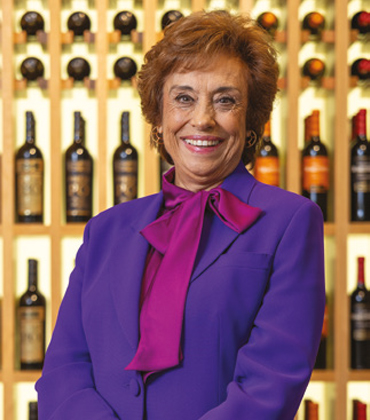
Top Fine Wine Producer in Europe 2026
For over a century, Casa Ermelinda Freitas has remained committed to providing wines that meet consumer preferences at affordable prices, without compromising quality. As one of Portugal’s leading wineries, it draws on a rich family legacy and deeply held generational values, translating them into disciplined winemaking that delivers consistent quality across 24 millions of litres each year. How does vineyard stewardship influence long-term wine quality and consistency? Quality that begins in the vineyard defines Casa Ermelinda Freitas. The estate has expanded from 62 to more than 550 acres, yet its philosophy remains unchanged. Even with an annual production of 24 million litres, the winery maintains a hands-on, family-driven approach anchored in authentic viticulture principles and uncompromising vineyard investment, resulting in wines of consistently high quality. This standard is reflected across its diverse portfolio of proprietary brands. Dona Ermelinda stands as the flagship, complemented by well-established labels such as Leo d’Honor and Terras do Pó. “Every vintage is crafted with the consumer in mind. Without them, we are nothing,” says Leonor Freitas, President of the Board of Directors..
European top Collagen Supplement Producer 2026

What research insights led Swedish Nutra to rethink traditional collagen supplement formulations? Swedish Nutra was founded to assess whether collagen formulations could be improved beyond what was already on the shelves. What began as a personal interest in well-being and longevity quickly evolved into a systematic review of clinical studies and peer-reviewed research, revealing where existing supplements fell short. Capsule-based products, in particular, present inherent constraints. Once excipients and fillers are accounted for, limited physical space remains to include collagen at clinically meaningful dosages. To compensate, many manufacturers turn to less bioavailable, poorly soluble forms of collagen, resulting in products that do not produce measurable outcomes. At the same time, their lack of palatability undermines consistency—a critical factor in any collagen regimen. How did formulation constraints in capsules influence Swedish Nutra’s liquid collagen development? These insights led Swedish Nutra to develop best-in-class liquid collagen formulas that people genuinely enjoy taking. Each serving delivers 15,000 mg of collagen in a single shot, which is equivalent to approximately 14 to 30 capsules, alongside complementary ingredients such as vitamin C and hyaluronic acid. Keeping the product in the refrigerator acts as a convenient daily reminder, and its pleasant fruity flavour makes it feel more like a dessert than a supplement. “We incorporate all the essential ingredients into a single shot while enhancing absorption,” says Christopher McGee, CEO. “Because it’s pre-mixed, there’s no preparation required; you simply pour and enjoy.” .
Plant Based Drink in Europe
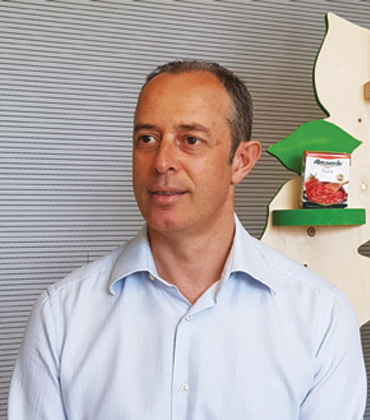
As the demand surges for healthier and more sustainable alternatives to dairy, Fruttagel emerges as Europe’s key innovator in plant-based beverage production. Based in Alfonsine, this Italian agricultural cooperative combines deep-rooted farming expertise with modern food technology to produce a variety of plant-based drinks. Since 2017, Fruttagel’s extraction facility has facilitated the direct processing of cereals and pulses, ensuring complete control over ingredient quality, origin and traceability. By combining in-house processing with vertically coordinated sourcing, Fruttagel supports clean-label, organic and private-label offerings while reinforcing its commitment to sustainable, locally rooted supply chains. Delivering Quality at Scale Fruttagel is a cooperative company specialising in the processing of fresh fruits and vegetables, cereals, tomatoes and legumes into finished products intended for retail operators, food service and door-to-door distribution. The company’s cooperative model integrates and enhances every stage of the supply chain, from field to distribution, and ensures that consumers receive food products that preserve the natural properties of fresh produce while upholding quality, authenticity, and safety. It brings together 12 agricultural cooperatives and supporting partners from the Emilia-Romagna and Molise regions. These agricultural cooperatives, which supply the raw materials for processing, represent and aggregate hundreds of local farmers. “Our members not only supply premium raw materials, but contribute to a resilient agricultural model that values people, land and seasonality. Thanks to their work, we can integrate the richness of Italian farming into a modern and efficient supply chain,” says Giorgio Alberani, sales director. Where Nutritional Value Meets Sustainability Responding to today’s demands for clean-label and functional beverages, Fruttagel anchors its portfolio in the Almaverde Bio line of fruit juices, nectars and iced teas. These drinks are mostly made with organic fruits and contain no added sugars or sweeteners. The range’s success reflects Fruttagel’s expertise in developing tailor-made products that align with rising consumer interest in sugar-free, additive-free options. Beyond its brands, Fruttagel co-develops private-label drinks, leveraging rapid prototyping and tailored nutrient profiles to meet each client’s needs. Its plant-based beverages are crafted from soy, oats, rice and almonds.
CXO INSIGHTS

Navigating Innovation Advancements in the F&B Industry
Ferran Soler Sagué, Corporate Logistics & Distribution Manager, Noel

The Complex Task of the New Product Developer
Rafael Fernandez, Head of R&D, Biscuits Process Technology, Cerealto Siro Foods

Ensuring Safe and High-Quality Nutrition Through Expertise and Innovation
Christine Lodder, Senior Director Global Quality Assurance, Mérieux NutriSciences

Driving Sustainable Change in Foodservice
Julie Owst, Head of Sustainability, Bidfood UK

Reflections on Wine Skills and Knowledge Training In Hospitality Today
Louise Gordon, Head of Wine Education, Hand Picked Hotels


IN FOCUS
Europe's Fine Wine Renaissance: Innovation and Market Evolution
Europe’s fine wine producers grow through premiumisation, technology adoption, evolving consumer tastes, sustainability focus, and expanding global demand for authenticity.
The Evolution of Food Biotechnology: A European Perspective
Emerging food biotechnology in Europe promises more sustainable production, reduced environmental impact, and better food security while addressing regulatory and ethical challenges.
EDITORIAL
Operationalizing Food Innovation
Commercial viability now determines whether food innovation survives beyond the concept stage. Across Europe, companies are measured not only by scientific advancement or heritage positioning, but by their ability to convert formulation intelligence, vineyard stewardship, and quality governance into repeatable market execution.
Leading this issue, Vivatra is recognized as Emerging Food Biotechnology Company in Europe 2026. Operating downstream of precision fermentation and synthetic biology, the company integrates formulation science, regulatory feasibility, processing realities, and sustainability into a single development workflow. Its AI-enabled Product Design Engine evaluates manufacturability, compliance pathways, and ingredient variability at the earliest stage—reducing pilot failures and minimizing scale-up inefficiencies. By narrowing development to solutions that are viable under production and regulatory constraints, Vivatra enables SMEs to convert functional ingredient innovation into scalable, market-ready food products.
In premium wine production, Casa Ermelinda Freitas is recognized as Top Fine Wine Producer in Europe 2026. Producing 24 million litres annually across more than 550 acres, the winery sustains a vineyard-first philosophy anchored in terroir discipline and generational stewardship. With more than 2,500 awards and an internationally distributed portfolio, it demonstrates that consistent quality at scale depends on sustained vineyard investment, varietal expertise, and a consumer-first portfolio strategy.
Industry insight broadens the discussion to capability and governance. Louise Gordon of Hand Picked Hotels underscores how structured wine training builds staff confidence and elevates guest experience through mastery of fundamentals. Meanwhile, Denis Vande Putte of BENEO frames modern quality leadership as a system-level function, integrating compliance, sustainability, and cross-functional coordination across global supply chains.
Across biotechnology, viticulture, and quality management, a shared pattern emerges. Durable growth in Europe’s food sector depends on early stage design discipline, supply chain transparency, and execution aligned with evolving consumer expectations. Organizations that embed science, stewardship, and governance into coherent operating systems will define the next phase of competitive leadership in Europe’s food economy.
